2013 in review
The WordPress.com stats helper monkeys prepared a 2013 annual report for this blog.

Here’s an excerpt:
The concert hall at the Sydney Opera House holds 2,700 people. This blog was viewed about 9,200 times in 2013. If it were a concert at Sydney Opera House, it would take about 3 sold-out performances for that many people to see it.
Remembering our Last Class
Terrific last #ParishECON class today! @Gov_KaiA + @GOV_CatherineG debate: "Do economic benefits of fracking outweigh environmental costs?"
— ParishGOV and ECON (@ParishGOV) May 24, 2013
Welcome!
Welcome to our blog!
This is a class blog authored by student contributors and curated by their teacher, Dave Ostroff.
The posts on this blog are part of an ongoing assignment in our Government and Economics course at Parish Episcopal School (Dallas, TX). The major goal of our course is to prepare students for responsible citizenship in the 21st century. Students post reflection pieces on a rotating basis. We invite you to return often and read what we write!
Please read the specifics of our class blog assignment here.
View our class blogging and commenting guidelines here.
Special thanks to Mike Gwaltney and his AP US Government and Politics students for providing the inspiration for this project!
The Winner’s Curse: An Economic Anomaly
My grandfather, William Campbell (1927-2013), played a large roll in theorizing the Winner’s Curse by applying physics equations to economics. The winner’s curse, in simplest terms, is the idea that the winner of a common value auction tends to overpay. Within competitive bidding, the winner’s chances of overbidding increase as the number of bidders, or consumers demanding the item, increases (Investor words). Each bidder estimates a certain price; some overestimate and others underestimate. The one who overestimates usually wins, and therefore is “cursed” with an item that is not truly worth what he or she estimated for. Such a curse can occur in two similar, yet slightly different ways: the winning bid exceeds the value of the tract, so the firm loses money; or the value of the tract is less than the expert’s estimate so the winning firm is disappointed (Anomalies: The Winner’s Curse).
 While working for the Atlantic Richfield Company, otherwise known as Arco, my grandfather was summoned to his boss’s office and asked a simple question with a complex answer: how can we save money? After strenuous research and collaboration, the team of engineers and physicists discovered that competition within bidding creates an atmosphere that does not usually allow the winner to truly win. In order to understand such a concept, consider an auction of a piece of land that has five million barrels of oil beneath it. No one actually knows the value of the land; so, some engineers will overestimate the value of the property and others will undervalue it. Most likely, the company that overrated the property will be willing to pay more and thus win the auction. So, we can conclude that within “competitive bidding, the winner tends to be the player who most overestimates the true tract value” (Competitive Bidding in High-Risk Situations). The variable cost of oil does fluctuate as supply and demand increase and decrease, which creates even more risk in an already dicey oil business.
At the same time, the winner’s curse does not necessarily apply to an auction marketplace like eBay. The winner’s curse only applies to competitive lease sales, or an auction with limited supply and excess demand. Marketplaces like eBay and Craig’s List have more supply than demand, allowing consumers to search for the lowest possible price before purchasing an item; thus, producers compete and lower prices. The prices approach equilibrium. Within competitive bidding for a single item, the price cannot approach equilibrium because excess demand disallows such a balance.

Not so fast
By no means is the winner’s curse a bid strategy; it is a mere analysis on what not to do. However, three simple rules can be followed to avoid being that guy who enthusiastically wins an auction only to watch his property slowly diminish in value: the less information one has compared with what his opponents have, the lower he ought to bid; the more uncertain one is about his value estimate, the lower he ought to bid; and the more bidders (above three) that show up on a given parcel, the lower one should bid.
Opportunity Cost of Doing My Homework
 Right now I could be playing with my chickens because they’re so cute but instead I’m doing my homework; the ‘opportunity cost’ of me doing my homework is not being able to play with my chickens. But I do choose to do my homework instead of playing with my chickens because I think it’s ultimately the better choice.
Life as a Factory Worker
 Do you ever wonder where and who produces your the favorite phone, IPad or computer? The Foxconn City is a complex of factories that house persons working for them producing Apple, Microsoft, Dell and Hewlett Packard project. Foxconn Technology Group, who owns the complex of factories, and employs 235,000 workers, has a reputation of tough tactics and sweatshop condition for their workers producing these in demand products. According to the Daily Mail, Apple Corporation uses sweatshop environments to produce the products that are sent to the west. Apple, for example, sold 93 million IPhones, 40 million IPads, 38 million IPods and 17 million computers, yet they are involved with a company that is paying the Chinese workers far below United States minimum wage earning a whopping $1.75 per hour or $273 per month, which would require months of work in order to be able to purchase one the products they make. Reports have indicated that workers were recorded doing 24 hours shifts at a time, while others were forced to stand up during their entire shift. These people are producing the phones and apple products that are craved all over the world, while working in a monotonous, tedious, assembly line environment under what looks clean, but horrible conditions. Many workers have committed suicide because of the harsh conditions in the factories; many factories have been forced to install suicide nets around their facilities.
 Even though abuses continue, Apple contends that they have sent 60,000 workers to college for free and have informed one million staff of their legal rights. Chief-executive Tim Cook claims that they are working hard to improve the conditions for workers and are trying to improve the lives of employees. He is working with Foxconn to fix the problems. However, there are still reports of 150 Foxconn employees threatening to leap from the facilities because of poor working conditions and low wages. Given the rise in Apple stock it seems that something could be done to improve the conditions of the low wages.
A Company’s main goal is to make as large of a profit as possible. These sweatshops are the most efficient way to make large gains. But do the cost outweigh the benefits? Many major companies like Apple believe in improving the working conditions of their employees. These companies are only left to wonder whether consumers would be willing to pay a higher price for their product in exchange of knowing these products are being produced the right way. According to basic economics and the law of demand, if a company raises the price of their product demand will decrease. When a product price rises, many consumers will be tempted to look at a substitute at a cheaper price, so therefore, when a company raises its price their demand will decrease.
Goober by Smuckers

Goober is a product created by Smuckers which combines the two complements, peanut butter and jelly, into a single product. Smuckers utilized the economic term of complements in creating this product. -Catherine G
Is Bale Worth It?
Today was the day that Tottenham Hotspurs qualified for Champions League. The Spurs needed to win along with a loss or tie for Arsenal. Even though Gareth Bale buried a game winning goal to give them a chance to qualify for champions league, Arsenal defeated their opponent disqualifying Tottenham from Champions League. Gareth Bale, a Welsh professional soccer player, plays in the Barclays Premier League on the Tottenham Hotspurs. In the season 2012-2013, the demand for Bale significantly increased due to his extraordinary performances. He appeared in thirty three EPL matches scoring twenty one goals and receiving four assists. Bale placed third in goals scored that season and received the Play of the Season award. The success Tottenham had in 2012-2013 only happened due to Bale’s excellent showings. Since Bale scored many game equalizing and game winning goals, the clutch factor increased the incentives for other clubs to buy him. Rumors were created saying Bale wanted out of Tottenham if they did not qualify for Champions League, causing teams around the world to be more interested in him. Since Tottenham was disqualified from Champions League next year and incentive for Bale increased, teams around the world, such as Real Madrid, are more than willing to pay substantial amounts of money for him. The question is: should Tottenham reject all offers or accept money and potentially star players for Gareth Bale.

This is a simple trade-off. There will be a cost and a benefit if Tottenham decides to reject all of the offers and keep Bale. The benefit of keeping Bale at Tottenham is that they keep their best player on their team. They are almost guaranteed success if Bale stays on Tottenham. The costs of rejecting all of the offers to keep Bale is the loss of a great amount of money and potentially other stars to fill in holes in Tottenham’s squad. Andre Villas-Boas, the manager for Tottenham, said, “his club wouldn’t sell Bale even if Real Madrid were to make a bid of £60 million” (BR). If Tottenham will decline any offer £60 million or less, they are losing a great possibility to increase the club’s wealth and to purchase other star players to improve the overall squad. The costs and benefits of selling Bale for money and players is the opposite. The benefit of accepting an offer for Bale is a substantial amount of money to increase Tottenham’s wealth and the possibility to purchase other star players. The cost of accepting an offer for Bale is the loss of Tottenham’s best and most inspirational player.
If the decision was up to me whether to keep or sell Gareth Bale, I would choose to keep Bale at Tottenham. Even though I could potentially gain a great amount of money and good soccer players, the benefit of keeping Bale on the team is more desirable to me. Bale is the heart and soul of Tottenham creating a large amount of chemistry throughout the squad. Chemistry plays a huge role in a club’s success, therefore I would spend my effort searching for a strategy that complements Bale’s play style. Gareth Bale will endure a long, promising future, therefore Tottenham would be making a bad mistake letting Bale leave and win trophies for another football club.
The Environmental Problem
The ever growing and prosperous capitalist economy of America is considered by many to be a near perfect system. Our economy helps ensure success is attainable, without detriment to any one person or any group. Unfortunately, this perception is not reality. The American economic system has brought about many negative externalities, most notably the environmental impact our corporations have made on our planet. Greed and overindulgent behavior of businesses have led to a possible environmental apocalypse. Large egocentric corporations are causing fossil fuels to be near extinction, mass pollution and destruction of vital habitats, and carbon emissions to rise. These negative externalities that are caused by corporations need to be reduced or abolished. At the moment the government is doing very little to stop corporations from destroying the environment. President Obama’s current environmental policies are very vague and undisruptive. Over the past 5 years Obama has enacted the Recovery Act and attended the Copenhagen meeting. These actions have led to very minimal environmental recovery. The Republicans and corporate lobbyists are not doing much to promote the environment either. In fact “The big business lobbies, like the Chamber of Commerce, American Petroleum Institute, and others, have been very clear and explicit in their support of commerce over the environment. A couple of years ago they stated they intend to carry out a major publicity campaign to convince people that climate change is not real, that it’s a liberal hoax.” Republicans and corporate lobbyist are actually denying the existence of an environmental problem even though the statistics show otherwise. In 2012 carbon emissions increased 2.6%. Increased carbon emissions will weaken the atmosphere and dangerously heat up the earth. Due to pollution, only 1% of Chinese citizens breathe air that is considered safe. This has caused cancer to be the leading cause of death in many parts of China. The north pacific gyre has approximately 100 millions tones of trash. This trash will harm sea life, and take centuries to dissipate. These facts show that environmental damage is extreme, and impacting quality of life on the planet. At the moment corporations are acting out of self-interest and greed. This will be an on going predicament unless there’s some alternative policies initiated. I believe that slight regulation as well as higher prices and taxes for certain fossil fuels will help alleviate the environmental woes. At this point in time, large businesses have too much power and freedom, which is causing large negative externalities. Creating higher taxes for fossil fuels, will promote switching to alternative methods of energy production. This will give corporations incentive to switch to cleaner energy. In addition, raising the price of certain fossil fuels like gas and oil will have a great affect on the consumer. Due to higher gas prices ,the consumer will most likely feel the need to utilize a car that does not rely on oil. Consequently, demand for gas run cars will decrease, and companies will start to make more eco-friendly cars that appeal to the consumer’s tastes and preferences. I also believe that we should implement stricter regulations. Unfortunately, large amounts of greed have consumed the American economy in the past 30 years. Corporations have started to deviate from rudimentary business ethics. The federal government needs to take some control over the reckless corporations. In recent years, deregulation, corruption, and greed has destroyed the earth, and the government has done very little to stop it. Implementing the right policies and actions will
 make the environmental problem treatable and will help the planet for all its citizens.
Republicans Introduce Census Reform Bill
This year we have studied both Government and Economics and worked on ways to relate our studies to the current events around us. This year has been one of Economic turmoil mostly caused by the Government’s struggle to achieve bipartisanship.In mid April the GOP began working on a bill that will limit the information the constitutionally required census will be permitted to ask us. This bill will have massive repercussions for the American economy. Not the state of the economy itself but the indicators used to calculate unemployment and the GDP itself. Making this story on primed for our economics class.

The Census is an essential part of both of our Governmental and Economic systems. Republican Representative Jeff Duncan has begun the process of pushing a bill through congress that will end the census as it is known today, limiting the amount of information that can be procured from it. This bill would limit the census to finding out information about population….and that’s about it. The bill states that the census may conduct only a “decennial census of population,”. It eliminates the part of the census that provides information about poverty, income, education, health converge and most importantly no economic census. Without further information, the ability to calculate unemployment rate will be hindered along with GDP. We would not be able to calculate unemployment rate because we would not know how many people are working nor what the people who are working are making. This eliminates our ability to know how much people are spending or saving. These pieces of information are important economic indicators for predicting and calculating GDP. Without this data the government will not know how to compensate for the economy. We willbe forced for a total hands off economy, removing government involvement entirely. Should this bill go through our Keynesian way of life could be put in jeopardy. As intrusive as the census could seem it it is a necessary part of our governmental system and essential to keeping our economy running in the state it is.
Before our class I would’ve viewed the GOP census bill as something nominal, really not worth noticing in the scheme of things. Now I see the impact the census makes. The importance of these economic indicators and the governments involvement in our economy can not be corrupted because we want a little more privacy. This article made me reflect not only on economics but on the relationship between our study of the constitution and our economics studies. Although I may not understand everything about economics, I understand the impact it has made in our world now, and how important it continues to be.
Original Atricle: http://portcitydaily.com/2013/04/29/congressman-jones-on-bill-to-end-intrusive-census-activities/
Student Loans and Their Implications on the American Economy
With everyone left in our Economics becoming seniors next year, the looming beasts of college and student loans are fast approaching. Even after college, the fear of having to get a job to help pay off the loans almost seems more daunting.

Thinking about the Burden of Student Loans
In today’s economy, it almost seems like a better idea to not go to college as to not have to pay off the student debts. However, this would leave young people in a precarious situation of not having a good enough job. This would lead to a decision between a high school diploma with a weak job or a college degree, student debt and a much stronger job. With those students with debts, it kills their credit scores and makes it nearly impossible to get a mortgage or a car loan or any other “big ticket” items. The whole aspect of student loans is sending “a whole class of people out into their professional lives with a negative net worth. Not starting at zero, but starting at a minus that is often measured in the tens of thousands of dollars. Those minus signs have psychological impact, I suspect. They might have a dollars-and-cents impact in what you can afford, too” (NY Times). Students have now become very burdened by a load that seems almost impossible to pay off. While it might seem like an economic death wish to enter the economy after college with such a large amount of debt. However, in today’s economy employers are more likely to hire a candidate with a college degree than without. Therefore, it becomes a weighing of cost and benefits between a high school diploma and no debt or a college degree with large amounts of debt.

In 2012, about 60 percent of college students borrow a student loan. ” There is roughly somewhere between $902 billion and $1 trillion in total outstanding student loan debt in the United States today” (American Student Assistance). About $85 billion of this total is past due. Despite all these economic statistics working against them, “in 2010, young adults ages 25–34 with a bachelor’s degree earned 114 percent more than young adults without a high school diploma or its equivalent, 50 percent more than young adult High school completers, and 22 percent more than young adults with an associate’s degree” (National Center for Educational Statistics).
High school seniors who are on the fence about attending college must weigh their costs and benefits and look at their personal interests. On one hand, they cannot go to college, not go into large amounts of debt, and enter the workforce at a net worth of zero. On the other hand, they can go to college, get a degree that can get them a high profile job, and enter the workforce with a large amount of debt. Some students who would go into large amounts of debt, may want to be a doctor, actor, business or whatever their heart desires. Those students have to weigh the benefits of following their dream against the costs of attending college.

Doctor in Debt

Man at “McDonalds”
Students who are graduating now face a choice, being a doctor who followed his dreams but is in debt or a man working at McDonalds with little chance to obtain a high profile job.
Keynesian Economics Today

The use of Keynesian economics was introduced by John Maynard Keynes in order to fight the Great Depression. Keynesian Economics uses monetary and fiscal policy in order to fight recession and inflation. Keynesian economics was a way to keep the economy at equilibrium by using two opposing policies. Both policies encourage spending and circulation of wealth through the economy. Keynes proposed the problem was in the demand and not in the business confidence levels. Through Keynesian economics the solution would not be to cut government spending or to cut wages so that the businesses would hire more people. The solution was to increase government spending and infrastructure to create jobs and lowering taxes to encourage people to spend money. The use of Keynesian economics could be used today for the problems we presently have in our economy, which is mentioned in an article for the New York Times written by Nancy Folbre.
Fiscal and monetary policy work opposite eachother to keep the economy in equilibrium by preventing recession and inflation. Fiscal Policy works through the government by increasing government spending and infrastructure and lowers taxes to encourage spending, which stimulates the economy. One example would be the war that pulled the US economy out of the Great Depression. The more demand for jobs and the increase in salary would promote spending and increase money flow in the economy. Monetary Policy is often the preferred policy because of its benefits over Fiscal Policy. It is much faster to implement because, instead of working through the government, monetary policy works through the Federal Reserve buying bonds in order to lower interest rates. As the supply of money increases the interest rates go down in order to encourage people to borrow money that will then be circulated through the economy. The graph shows how monetary policy increases the supply of money which decreases the interest rates and encourages people to borrow money which is circulated through the economy.

Supply vs. Interest Rates
http://www.martinfrost.ws/htmlfiles/keynesian_economics.html#Wages_and_spending
Economists predict the solutions to today’s recession are the same solutions proposed by Keynes during the Great Depression. According to the article written by Nancy Folbre in the New York Times, our society has fallen into debt because of a lack of demand for jobs. His solution to this problem would be jobs created by the government.
Keynesian in Nixon’s Insanium Cranium

Richard Nixon (conservative)
British economist, John Maynard Keynes, developed a new theory of economics that dominated macroeconomic thinking in the postwar era. Keynes presented his ideas in 1936, in a book called The General Theory of Employment, Interest, and Money. He desired to develop a comprehensive explanation of economic forces. An explanation like this could give politicians and economists insightful information on ways to get out of economic crises like the Great Depression. This form of demand-side economics gained the favor of President Richard Nixon as he proudly declared himself “a Keynesian in economics,” on January 4, 1971. This was a rather unusual statement for the arch-conservative president because Keynes was viewed as being well to the left, both politically and economically. Regardless of his political party, the president aimed to balance the budget on a “full employment” basis, a Keynesian idea. Conservatives viewed this “as a license to run budget deficits forever,” according to the New York Times.
A key component to Keynes’s ideas is to see the economy in a broader view and focus on the economy as a whole. Keynes looked at the productive capacity of the entire economy, which is the maximum output that an economy can sustain over a period of time without large increases in inflation. The British economist attempted to answer a question concerning the Great Depression: why does the actual production in an economy sometimes fall short of its productive capacity. The answer Keynes proposed included the fact that neither consumers nor businesses had an incentive to spend enough to cause a rise in production. It did not make sense for a company during that time to spend money to increase production when no one else had enough money to buy the products. Also, unemployed consumers could not spend money that they did not have. Nixon became the first president to balance the budget based on “full employment” which meant the United States would “spend as if it were at full employment to bring about full employment, thus justifying an acceptable amount of deficit spending.”
According to the Congressional Budget Office, the “recent economic downturn has increased the budget deficit by about 2.5 percent of the gross domestic product annually since 2009.” The Congressional Budget Office also calculates that “if the economy were operating at its potential based on its productive capacity” (what used to be called “full employment”), gross domestic product would be $1 trillion larger this year.

John Keynes
“Conservatives do not like calculating the deficit any way except literally,” says Bruce Bartlett. “All of the adjustments to the deficit are assumed to be tricks to make it look smaller, they believe.” But back in 1971, having a Republican president adopt a left winged idea such as an expansionary budget policy and balancing the budget on a “full employment” basis was radical stuff indeed.
When Nixon first took office, he tried a conservative method to tighten the money supply, however this method did not work and the economy appeared to be heading into a recession. With the American federal budget deficit totaled at $23.03 billion, combined with Nixon’s failure of obtaining more revenue through tax reform legislation in 1969 and rising unemployment (4.9 percent) and inflation (5.7 percent) rates in 1970, Nixon decided it was time for a change and proudly proclaimed himself to be a conservative Keynesian, hoping to turn things around. The administration then turned to fiscal policy solutions.
Nixon’s new Keynesian methods turned out to be a short-term domestic success. His New Economic Policy “attempted to balance U.S. domestic concerns with wage and price controls and international ones devaluing the dollar.” N.E.P. worked so well that by early 1972, the output rose sharply and unemployment fell, however inflation increased. Nixon became the only president since World War II to bring about an economic upturn in a presidential election year. This astonishing fact contributed to his landslide re-election in 1972.
When President Nixon resigned in 1974, inflation was at 11 percent and unemployment rates increased to 5.6 percent; however the deficit was down to $6.14 billion. Although he was a conservative president, he adopted more liberal Keynesian methods and succeeded in his attempt to balance the budget on a “full employment” basis.
Online shopping: Good or bad?
There have been a lot of discussions about whether or not online shopping is a positive thing or not. I personally enjoy the convenience, but many are concerned about a negative impact it can have on the economy. Browsing a website is easier than going to a store and browsing from aisle to aisle, and it’s open 24 hours a day. However, problems arise when it comes to the sales tax that seems to be left out on many internet purchases. Right now, “states can force only businesses that have a store, plant, or warehouse within their borders to collect their sales taxes on their behalf.” The Marketplace Fairness Act would change that. Should the MFA be put in place, it would force all out of state businesses to collect taxes. This would generate billions of dollars of revenue, based on the fact that the US spent $52 billion on internet products in Q1 of 2012 alone (source). The tax on internet sales would also compel people to go to stores instead, stimulating more activity in the economy by forcing businesses to hire more staff to

accommodate an increase in store shoppers. The internet management and the actual store staff are usually two entirely separate divisions, with a web-based store requiring a minimal number of employees. The pros outweigh the cons when it comes to implementing an internet sales tax.
A Possible End to World Hunger?
As I went to check my mail on Yahoo.com, I was shocked and intrigued when I saw the headlining news story, “NASA awards grant for 3-D food printer; could it end world hunger?”. World hunger has obviously always been a problem; one that most people see as inevitable and too great of an issue to ever be solved. We are seeing an excess of demand; too many people to feed and not enough resources or efficient enough economy to prevent hunger. We have hit a point where more resources are greatly needed, yet they are slowly dwindling. But a project headed by Systems & Materials Research Corp and funded by NASA, may just be the solution to this problem.

3-D printer food made from meal worms
According to Anjan Contractor(the mechanical engineer behind the idea of the 3-D printer) and other economists, our “current food systems can’t supply 12 billion people efficiently” and “so we eventually have to change our perception of what we see as food”. This 3-D printer would turn foods into powder form that could last for 30 years, and use carbohydrates, sugars, and proteins to make edible foods that people could survive off of. The first prototype they will attempt to make is a 3-D pizza printer. This pizza printer would start by printing a layer of dough that would be baked as it was printing by a heated plate at the bottom of the printer. Then a tomato base would be made from stored powder mixed with water and oil. Finally, a protein layer would be added. These 3-D printers would also be able to provide personalized nutrition, where “ if you can program your needs into a 3-D printer, it can print exactly the nutrients that person requires”. This machine works just like any other 3-D printer, but instead of sending a design, you send a recipe with precise ingredients and measurements. Other food sources that could also be used along with the printer are duckweed, grass, lupine seeds, algae, insects, and beet leaves.
 I agree with the prediction that food will continue to become more expensive, because the demand is greater than the supply. People will have an even harder time feeding themselves and their families in the future if nothing is done to make more economically reasonable food options. NASA has given the Systems & Materials Research Corp a six-month grant that comes to $125,000. They are mainly interested in it so that they could use it to feed their astronauts who go on long space voyages. NASA was convinced of the success of this project after watching it synthesize squares of chocolate. I believe that more agencies should invest in this project because there is great incentive involved: to end world hunger. This project has the potential to be one of the most beneficial and life-changing inventions of all time, which should give people the incentive to ensure its success. Not only could they end world hunger, they would dramatically curb food waste. These printers might not produce the most natural and tasty foods, but in terms of keeping people from starving for inexpensive prices, they can do the trick. If these printers succeed, in 30 years every new home could be outfitted with a 3-D food printer instead of a microwave. These printers give us hope for the future.
Minimum Wage: More Good than Harm
Recently, the Obama administration has started to push for a raise in the minimum wage from $7.25 to $9.00, a $1.75 increase. This increase could do one of two things- substantially improve the lives of the minimum wage workers that will be affected by this increase or lower the incentive for businesses to hire employees and asking them to take a hit on their profits. I became fairly interested in this topic after I read a blog post on the Department of Labor’s blog. This post was about a roundtable discussion in Baltimore that told the stories of several different minimum wage workers. These workers work long weeks and still come up short for the necessities that them and their families require. Their stories opened my eyes to the everyday choices and struggles that these people must face because their wage is not high enough to support their family. Upon further research of this topic, I found some interesting statistics and numbers. “Nearly one-third of U.S. minimum wage workers last year were teens, and about 45 percent were 25 or older, according to Bureau of Labor Statistics data. Two-thirds of all minimum-wage workers were women.” (Dallas Morning News) In California, “About one in eight California workers – about 2 million people – earns $8.80 or less an hour. And the vast majority of those workers are adults rather than teens at an after-school or summer job.” (LA Daily News) This is definitely a problem because though the teens don’t need to pay for their necessities, there is a large number of people that are not getting paid enough to put food on the table.
Though it seems simple and reasonable to raise the minimum wage, there are some costs to this increase. Critics of this plan say that “ higher minimum wage would lead to higher unemployment among lower-wage workers.” (Dallas Morning News) This problem arises because employers are not willing to keep employing/hiring new people because the minimum wage is higher. This causes excess supply of workers, leaving the US in disequilibrium. To some businesses, the increase in wage isn’t really a problem because their wage is above the state set minimum wage. A good example of this is Costco. “Costco chief executive Craig Jelinek said recently that paying “good wages makes good sense” because it lowers employee turnover and increases productivity, saving money” (Dallas Morning News) To others, specifically restaurants and fast food chains, this change seems detrimental and would cause all sorts of problems. “Very few restaurant operators are big fans because there are very few ways to mitigate the impact of increased wages.” (Dallas Morning News) These businesses have very few options to work around this increase of wage. They can basically either raise their prices or cut labor hours, both of which many restaurants are very reluctant to do.
In my opinion, the benefits undoubtedly outweigh the costs in this situation. Although our economy has just seemed to get stable, there are many people in the US who still have to choose between food for their children or their electric bill because they’re getting $200 a week without taxes.
Costs and Benefits of Retirement
Every day there are more and more people retiring at a younger age. By the time an adult is around 55 they are tired of working and just want to retire already. But, what they do not realize is that retiring early will give you much higher medical expenses. Heath care costs can add up quickly when you aren’t eligible for Medicare, which kicks in at age 65. Someone who retires at age fifty-five will spend an average of $119,600 over the next ten years on insurance premiums and out-of-pocket expenses, said Dale Yamamoto, who authored a report on medical spending on behalf of the Society of Actuaries and the Health Care Costs Institute. By contrast, a sixty five year old leaving work today will  spend only $50,900 over the next ten years thanks to Medicare, which provides less expensive coverage.
There are many study’s going on right now about retiring and when the best time to retire is at. The goal of the study is to help people understand how much money they’ll need to retire. Dale Yamamoto said, “My neighbors had no idea how much health care costs, they were floored by how much it costs for just one year before Medicare kicks in.” The goal of Dale Yamamoto is to inform everyone how much it costs to retire before Medicare comes into play. In the study they found out that by the time today’s fifty five year old retiree hit age eighty-five, he will have spent $372,400, on average. The sixty-five year old retiree will spend only $146,60. That is more than a $200,000 saving if they choose to retire at age sixty-five rather than age fifty-five.
If someone really wants to retire early they have to know what they are getting themselves into. They have to think about the costs and benefits as well as the trade-offs, and the opportunity cost. The main cost of retiring early would be the loss of money. They could lose around $200,000 that could be useful later in their life. Also, work makes someone get up and get moving. If a fifty five year old does not go to work then they are more likely to sit around all day and not be as active. It is important for people to work while they are getting older because it keeps them moving. But, on the other hand, the benefits of retiring early are sleeping in, having more freedom to do what they want, traveling the world, and spending more time with family. In my family, all of my grandparents have worked until they were at least sixty-five. My grandpa still works today and he is eighty-one years old while his partner is ninety-four. Going to the office really keeps them going and they are more motivated throughout the day. So, they are not losing any money while they are working they are having to pay less for medical expenses while still earning a salary. On the other hand, my friend is forty-nine and she has already retired. She still has a long time until she gets the Medicare benefits so she is having to spend a lot more on her medical expenses than most people. But, before she retired she weighed the costs and benefits of retiring early. Everybody has different views but in my opinion the costs outweigh the benefits and it is important for people to stay working until they are at least sixty-five or can physically no longer work. People who choose to retire early are making a trade-off because they are losing money but then also gaining freedom to do whatever they want to do during the day. People should retire when they physically cannot work anymore or when they turn sixty-five not when they just do not feel like working, if they do not work they will lose a lot of money in the long run.
Ammunition… Ammunition… and More Ammunition
The primary driver of the firearm ammunition shortage is driven by the reports of excess government buying of ammunition, fears of the repeal of the second amendment of the constitution, and the recent state laws limiting gun ownership. The resent state repeals of the gun laws are in “Connecticut, Hawaii, Massachusetts, New Jersey, California, Illinois, New York, and D.C, and Montgomery County, MD” (Amselle). Thus creating a fear but also the desire to individually stockpile ammunition. The result of this fear has lead to severe shortages of ammunition not just locally, but also nationally. The response to this fear is by the gun stores or ammunition dealers. They have to decide to either raise the prices to the point of price gouging, or limit the number of boxes each costumer can by each day. Economically price gouging is the most efficient example of the supply and demand relationship because the price will rise to a point that the individuals stock piling the ammunition will stop buying them because they are too expensive. Then in results, only those who need the ammunition will pay that high price for it. When it gets to that point, the inventory will begin to increase at the dealers so that the owner will begin to reduce that price to turn its inventory back around. Thus, you have a true market supply and demand equation. In rationing, or limiting the number of boxes a customer can buy, they do not have a supply and/or demand relationship; they have a purchase limitation relationship. Economically speaking the price gouging is the most efficient way to implement the supply and demand policy.
An example for this would be the 22LRS being sold online at Cabelas. Yesterday was no inventory, however, today they received Winchesters 22LRS and sold them for $6.99 a sleeve of 100. They limited each customer one sleeve per day. In the end, they sold out in about 2 hours. Had they raise their price to $100.00 of a sleeve of 100 and not had a limit of one per day, then many of the people who bought them for $6.99 would not have bought them for $100.00 a sleeve. Their customers would have refused to pay them. Their inventory would have remand and not sold out in two hours, Cabelas would have reduced their price, which would result in removing the inventory off of their shelfs.
The second article talks about how Texas is pushing for a bill that will establish a tax holiday for guns, ammunition and hunting related supplies on March 2; Texas Independence Day. Most believe this will never pass, but the theory behind it, is to supply additional support for hunters and outdoorsmen while also celebrating it on the day marking Texas’ Independence. Those that do not believe this will ever pass are more focused on the lost revenue on the state then they are celebrating the true Texas independence. Other states such as South Carolina have passed legislation similar to this and discontinued the program due to the significant lost of state revenue.

Texas, on the other hand, is currently beneficiating from a $9 billion surplus, but next years budget is showing a $27 billion deficit. With the significant state budget deficit, it will be extremely difficult to pass other sales tax holiday that could take hundreds of thousands of dollars off the sate revenue. In reality, this legislation is probably more publicity then seriousness. The other sales tax holiday within the state of Texas is for school supplies. That was passed to benefit the lower income families to make it more affordable for them to buy school supplies for their children. In this legislation is simple to benefit gun owners and outdoorsmen. In times like these, the owners and produces have to look at the supply and demand to figure out their next move to keep the supply and demand at equilibrium.
FIFA and Economics
 Recently, a few friends and I have become overly consumed with FIFA 13, an online soccer simulator played on the Xbox 360, PS3, or PC. FIFA has several different game modes but our favorite game mode is called FIFA Ultimate Team. Ultimate team places you at the head of a team where you can form a squad and play as that squad against on, or offline opponents. What is so such as World of Warcraft or Eve- where Ultimate Team players from all over the globe can buy, sell, and trade any footballer to generate an economy driven by player-made pricing and purchasing. Similar to a stock market, certain players have valuable stock and others do not. The similarities between the Ultimate Team auction house and a real market present evident trends such as supply and demand which can be connected back to our study of economics. But how close do these online simulators come to the real deal?
Surprisingly enough, some games have pulled off very successful artificial economies. An unknown blogger writes, “I’ve studied economics, and can safely say that MMO economies have measurably advanced our understanding of real world economics.” By giving the player the freedom to price an item however they choose, it creates a highly competitive market where equilibrium fluctuates regularly. What adds more competition, though, is a timed auction feature that is found any artificial marketplace from FIFA to Ebay. Especially in FIFA, the timed auction feature allows for drastic changes in equilibrium price daily, since the maximum time you can list a player for is 24 hours. Take for example the picture of Lionel Messi’s stock (ingame) below; one card is listed for 840,000 buy now while the other selected card is listed at 1,000,000 buy now.

Notice the selected card has a buy now price of 840,000 coins while the card being scrolled over has a buy now price of 1,000,000 coins
Thus, a “get-in, get-out” mentality is needed if you really want to profit in these games. The methods used for success in FIFA can be very closely linked with the methods used for success in day trading in the stock market. I have learned from experience which players I can buy low and sell high. If I have enough disposable income (ingame) then I can buy several cards of a certain player and control the market price of that player. In other games, take World of Warcraft for example, someone can buy low and sell lower in order to help lower level players to increase their skills. A blogger nails this market exploit when they wrote, “In [World of Warcraft], I’ve driven down wool prices to help lowbie (low level character) crafters” (rpg.net). A rare occurrence to see a benefactor spend in order to help those who can’t necessarily afford to spend. Nonetheless, with such a vast amount of auctionable items in these games, presents endless opportunity for players to make a profit, which I think fully captures the essence of real life marketing.
Games that include an auction house feature develope unique economies that begin the same way that any real economy would. Though it may not be real, the work ethic required to produce profit is similar to that of a real market as well. What we can conclude about video games that include an auction house feature, such as FIFA 13, is that they help us experience a real life market without real life currency. Its nice to know that by playing videogames I can not only make connections back to my studies of economics but I gain a great deal of experience in a field that could possible be a part of my future.
Decrease in Unemployment Rate: True or False?

Source: American Progess
As the rate of unemployment has been dropping in 2013, we see this as a lagging indicator that more jobs are becoming available. The unemployment rate hit a peak in 2010 with a high of 10%. Ever since it has been steadily decreasing and most recently reported to be 7.5% as of April 2013 (Bureau of Labor). One of the largest gain in jobs occurred in Texas at 33,100 and the second largest in New York at 25,300 jobs gained. (Bureau of Labor). As we near the end of the month of May, we see that an unemployment rate has not yet been determined for this month showing that it is a lagging indicator for how our economy is doing. The decreasing unemployment rate renders hope for our economy. This is due to the fact that there are more jobs available because more production of products is being called for as a result of consumers spending more money and demanding more products. More production to meet consumer’s demand simply cannot be accomplished by a minimal amount of laborers therefore more jobs become available thus lowering the unemployment rate.
As this rate continues on a downward trend, we see consumers spending more and more money to grow the GDP (gross domestic product). Also, as more and more people are obtaining jobs, more and more people have more money to spend which will also grow the GDP. Because consumer spending makes up approximately two-thirds of the GDP, putting more money in the pocket of consumers encourages them to spend more and increase the GDP. This is necessary in order to grow our economy because GDP is based on consumer spending, investments by businesses, government spending, net exports. America’s net exports are a negative number because we import more than we export and that lowers the GDP.

Source: Bureau of Labor Statistics
Although having more money in the pockets of consumers for them to spend is an ideal way to increase GDP because it makes up such a large portion of it, that is not always what happens when people have more money than before. The paradox of the Thrift suggests that as consumers obtain more disposable income, they will save more of it to protect their self-interest which in turn hurts the macro-economy. This idea lead to Keyne’s solution to increase government spending in order to make the depth of the trough smaller. This solution suggests that government spending is the way to fix the problem. At the end of 2012, however, both solutions were put into question and taxes were raised, lowering the amount of disposable income consumers have to spend to grow GDP and by March government spending was cut which slows the growth of GDP as well.
It turns out that the decrease in the unemployment rate is due to the fact that there are half a million fewer people in the labor force now (Money CNN). What seemed like good news for the economy at the time the new unemployment rate was calculated is really just a decrease in people who are in the work force. The unemployment rate dropped for the wrong reasons meaning that there has not been a significant increase in consumer spending therefore no significant increase in GDP.
“Keystone” For the Future
While driving home from the store last month on April 24th, I came across a significant traffic jam not too far away from my home. Upon inching closer to the intersection I noticed there were many police officers trying to keep order to what seemed to be about 200 people with signs, shouting through blow horns. While peaceful, the protestors were shouting “Say no to Tar Sands” while their signs not only referenced tar sands, but “Keystone XL.”

Source: treehugger.com
After finally arriving home yet still curious as to what I just witnessed, I researched Tar Sands to learn they consist of heavy crude oil mixed with clay and bitumen. The tar sands are located in the Canadian forest near the eastern foothills of the Rocky Mountains.) Tar sands are relevant to certain environmentalist groups opposing oil production. Extracting the crude oil from the tar sands produces three times the greenhouse gas emissions of conventionally produced oil because of the energy required to extract and process the oil (Rainforest Action Network). I further learned that the term “Keystone XL” refers to the Keystone Pipeline. What does all this information have to do with a protest in Dallas on April 24th? Well, It turns out that the opening ceremony for the George W. Bush Presidential Center was scheduled for April 25th. Since the protest site was near Love Field, I can only assume that the protest site was located on the route one or more of the living Presidents may have taken from the airport to their hotel.The Keystone Pipeline is a proposed 1,179 mile crude oil pipeline originating in Alberta Canada and extending through the United States, depending on the final route, from Montana to Texas.From a macroeconomic standpoint, and considering the current state of our economy in the United States, the pros far outweigh the cons. For example, the pipeline will carry 830,000 barrels of oil per day thus reducing our dependence on foreign oil by up to 40 percent. This increase of supply of oil, coupled with the reduction in transportation costs would definitely reduce the cost of goods to consumers. In addition, our country would be less dependent on foreign oil, thus reducing our need to be so involved in the Middle East from a military and economic aid standpoint. From a jobs standpoint, it is estimated that the pipeline would require 9,000 skilled American workers such as welders, mechanics, electricians, pipefitters, laborers, safety coordinators and heavy equipment operators. In addition to the construction jobs, an estimated 7,000 jobs would be created to manufacture the pipe, steel fittings, pump and control devices for the project. Also, the pipeline would generate an estimated $20 billion including $99 million in local government revenues and $486 million in state and government revenues during construction. Finally, an estimated $5 billion is expected in additional property taxes during the life of the pipeline (TransCanada). In other words, the Keystone Pipeline would have a positive effect on many macroeconomic factors in our country including GDP and accelerate economic expansion during the business cycle.
 While there are many environmental factors that must be considered with the Keystone Pipeline, the most pressing is the amount of additional greenhouse gasses that the project will produce. In Joe Nocera’s article entitled “An environmentalists case for Keystone”, he writes, “According to a study by IHS Cera, a leading energy research firm, the oil from the tar sands emits only 6 percent more greenhouse gases than other, lighter forms of oil. (Environmental groups have tried to poke holes in the study, but even they don’t come up with the kind of increase that would doom the planet.) What’s more, there is plenty of oil being produced today with the same greenhouse gas consequences as the oil from the tar sands” (Nocera). Given the current state of the economy, our reliance on foreign oil and the positive economic impact, it makes sense for President Obama to support the Keystone Pipeline as a means to fulfill his campaign promise of repairing the United States Economy.
Quality versus Price

The economic struggle is causing the fast food chains to lower their prices even further making many people think that the US is officially in the gutter. Fast-food chains such as McDonalds, Burger King, and Wendy’s have been lowering the “bar” of food pricing which in turn causes the consumers to think that the quality of the product has gone down with it. I personally believe that this is just something that people are seeing as a sort of “scapegoat” instead of facing reality and seeing that maybe it has always been this low of a quality and the fast food chains are actually just trying to bring in more customers rather than selling them “miscellaneous spam” because they are getting too cheap.
Many fast food places, according to Lisa Scherzer of The Exchange, “contend with increased competition, cost-conscious consumers and a still-uncertain economy, they’re trying to outdo each other by slashing prices ever more in the hopes of getting customers through the door. But some franchisees are grousing, suggesting those rock-bottom prices are getting too cheap for their comfort.” This has always been a given in the business world as companies compete with each other by changing up their pricing, but for their customers to start thinking that the lower prices mean otherwise is a big problem for all the businesses. I think that businesses should be a bit smarter and use this thought to their advantage, an example being the $1 menu at McDonalds. McDonalds knows that people are always going to look for fast cheap food, and during these economic times they knew that they could attract more business by creating the incentive of having a menu in which almost anyone can afford to buy. The economic efficiency was a success in their $1 menu as more and more customers gathered to their restaurants, however as the fast food chains caught on and did the same, the only thing left to do was to lower the prices of their main items; a mistake all the franchises would regret. Though the law of demand states that the lower the price of an item the more consumers would buy it, it also states that if it is too low many people will overlook it.
As the ‘invisible hand’ did its business, the fast food chains realized what was going on with their customers and decided to start bringing back their regular prices that finally brought back their regular amount of customers. This was shown in McDonalds as their “sales trend was up 7.7% in January 2012 (for the U.S.), 11.1% in February and 8.0% in March (Scherzer).” Now all the fast food franchises are relying on promotional goods and are thinking about the opportunity costs of their customers as they decide whether to buy their food because it is cheaper or because the value is respectable to the price, meaning that the customers either buy low quality versus quality that is decent and fair to the price. Honestly, as a customer I would think that if a business is trying to hard in getting people to buy their food then that business is going in the gutter, however if a business does it without shoving commercial after commercial in a person’s face all the time then that business must be thriving more than the rest. So in conclusion, fast food franchises need to keep the bar constant since they are already a low standard of food, and people need to realize that what they are buying is not necessarily bad in quality rather it is not as good as homemade or restaurant food.
A debate on Oil
The United States always has trouble making decisions that are related to energy sources. A report from the Financial Times reports the US has been increasing imports of crude oil from the Middle East. In fact, these rates have been the highest since 2008. Increasing dependency on oil from the Middle East is detrimental because US would have to increase security and involvement. We could reduce these risks by looking to resources closer to North America.
 One of the largest sources of oil on earth is in Alberta, Canada. It contains oil sands, which contain clay, sand, and bitumen. The bitumen can only be extracted through a complex and expensive process. Also, oil sands are more corrosive than crude oil, so transportation will require more attention. However, building the pipeline would mean an estimated 3.75 trillion barrels of oil. The world’s known crude oil reserves are about 1.76 trillion barrels.
It is a matter of cost and benefits to decide whether the US should build the pipeline. Canada has been pushing the States to build the pipeline. Although, lawmakers are worried that the corrosive oil will cause multiple spills and accidents. I believe that the US should build it for a few reasons. The pipeline will allow the US to reduce dependency on the Middle East. Also, Alberta has a lot of oil so the amount of output will be extremely beneficial. The creation of this pipeline would be a huge investment, but the rewards will ultimately outweigh the costs.
Revenue Neutral Carbon Taxing
 In economics this trimester, we discussed the idea of a revenue neutral carbon taxation and while I think the goal of the idea, to have less pollution in the environment is a very noble one, I do not think this is the best way to go about reaching the goal. Climate change is a real problem caused partially by carbon usage and in trying to do our part to lessen that effect, we thought of revenue neutral carbon taxing. According to the province of British Columbia, which has implemented such a policy, this is a situation in which, better alternatives to coal will be made cheaper and the tax on coal will be made higher. The idea is that this will promote usage of materials that are better for the environment without affecting people’s personal revenues.
While the concept behind this idea is very intelligent, I think it has one fatal flaw, the fact that it is revenue neutral. Anything that is revenue neutral has no affect on the amount of money a person can spend and therefore no effect on the environment. Yes, many people would see the money saving advantage of switching to more efficient methods, however, I feel some would understand the fact that not doing anything does not make them worse off and not change their ways.
I think we do need to do something to help us reduce carbon consumption in America and this idea is definitely on the right track, however, it may not be enough to get us all the way to where we want to be. We might need to consider either combining this method with others or using a different method entirely. My feeling is that many people in America will not feel affected by this policy change if it is revenue neutral because that means there are no negative consequences should someone fail to try to consume less carbon.
The Fight of the Electric Car
In the past few decades there has been a big increase in demand by consumers for an alternative energy source other than gasoline regarding vehicles and transportation. Companies have attempted every imaginable configuration for powering a car, diesel, hydrogen, and steam powered are just a few of the more normal energies attempted. However in the past few years the field of electric cars available on the market has truly started to explode. But not many are seen on the road on a daily basis and that is because some the cost and benefits just don’t seem to make sense.
Electric cars in the past few years have really started to advance in the area that has always been their Achilles heel , fuel range. Time Magazine talks about how the MPG (miles per gallon) of and average gasoline burning vehicle often far exceed the MPC (miles per charge) of electric vehicles. This is why many companies such as Tesla and Fisker have developed charging systems in the cars that charge the cars while either driving, through solar panels in the roof, or through regenerative braking. Companies have been able to take electric cars from the shadows of the gas powered cars that could drive 200-300 hundred miles per tank, to leading them with the near 400 mile per charge RIMAC. The new wave of electric cars with plenty of range seem to be drawing drivers of gas powered cars to the more environmentally friendly electric car.
The first problem that most consumers see in the electric car fleet is the amount of pollution it takes to make the cars and more specifically the batteries themselves that power the cars. The car research website Car Connection wrote an article about how it takes far more energy to build, drive, and destroy a Toyota Prius, what is considered the poster boy of hybrid and electric cars everywhere, than it does to do the same to a “gas guzzler” like the Hummer H2 SUV or Dodge Viper sports car. The production of a electric car battery requires a massive amount of resources that have to be shipped all over the world on polluting ocean freighters, then into polluting factories and then into cars, and unfortunately to hurt the electric cars even more, their batteries do not last nearly as long as those of normal gas production cars.  These batteries also require a much more energy consuming and usually less Eco-friendly proses of breaking down the batteries after use, which also discourages environmentally conscious potential buyers from purchasing these cars.
Lastly, the electric car market has had its problems with cost, not cost benefit cost, but true monetary cost. With the price of a minimalist electric car running between 25 and 30 thousand dollars many buyers are dissuaded due to their starting prices or the sky high, top of the line, bank busting, million  dollars plus needed to be shelled out for the above mentioned RIMAC. These cars make the high mpg gas powered cars produced by Chevrolet and Ford that cost a mere 13 thousand dollars that produce a near 40 mpg. Electric cars are not for those on a tight budget due to their high prices and this is before maintenance is factored in, or risk. In recent months there have been many reports of the electric based hybrid Fisker Karma, a mainly electric powered performance car that has a gas engine for high speed when wanted by the driver, suddenly exploding in a ball of flame. This has not only led to many injuries, but also the impending bankruptcy of Fisker due to lawsuits and government fines. There is still much research and development needed in the safety and production cost of electric cars.
Electric cars are just breaking on to the mainstream market, and for that reason they have a lot of advancing to do before their benefits out weigh the costs enough to make electric cars an everyday product used by a majority of the people. Even for the eco friendly fanatics their are still many problems with the ways these cars are produced and how polluting that can be. The safety of these cars also comes into question as well as their range of transportation on a single charge. While electric cars may be new to the market, they are extremely young in their development and need much advancement before the average person will want one, let alone have one, due to the costs, for now, far outweighing the benefits.
Should We Tax the Gas?
In this day and age gasoline and carbon emitting fuels are a key product in every man and woman in the United States. But this is causing a huge amount of carbon to be released into the atmosphere, which is slowly killing the planet and all of its inhabitants. To try and stop the effects, the government has decided to make it so that not as many people use gasoline and fossil fuels. As described by the Stanford Hoover Institution, the plan is to use a tax on fuels called the revenue-neutral tax. This tax is designed to increase the price of fuels, but put the money earned by the fuel tax to decrease the taxes in other places, for example income tax.

Graph explaining the effects of a Revenue-neutral carbon tax provided by Carbon Tax Center
It is beneficial because the government is not trying to earn money but rather keep the money in the hands of the citizens. Also because of the higher gas prices the incentive to buy gas is lower which will prevent people from buying as much. This eventually leads to a decline in the use of gas, which in turns slows down the amount of carbon being released in the atmosphere. I believe this is a very good idea, because not only does it discourage customers from using fuels, but it also promotes businesses to make more fuel-efficient and hybrid cars. Not only does this help the planet from harmful carbon emissions, but it also helps the US economy because the US would not have to import foreign oil from and sell more American made cars that have a better effect on the environment. So the tax could help bring economic growth back to the US so our import costs would not be more than out export profit. After hearing all of these examples of how this tax is great and will help the country tremendously, there are still people who do not like the idea. One opposing idea that I have heard is that ‘if the citizens are getting more money (from the decreased income taxes and such) then won’t they continue buying gasoline’. This is a good argument to the tax. But I believe I have the explanation about why the tax works rather than what the opposition says will happen. My idea centers on an idea brought up in the video Comedy, Economics, and Carbon taxes. In the video it describes a hypothetical situation about three people selling each other fuel consuming machines and as a consequence have to pay extra for medical bill because of the major air pollution. In the end the three people each sold on machine and earned 100 dollars, but had to pay 140 extra dollars in medical expenses. In conclusion each person had lost 40 dollars with out even knowing they had done so. This is a similar situation to the revenue-neutral tax. A person finds out that the price of gas is too large, but does not necessarily think about the fact that he/she has enough money to afford it. The consumer thinks they are doing the best for themselves by not buying the pricy gas when they could.

Data given by the British Columbia Budget Website. The British Columbia is currently experimenting with the tax.
Another argument is that the law of demand clearly states that when the price of a good is raises the demand of the good is decreased. This is the case most of the time, except for inelastic good, which are goods that are bought no matter the price. This may be the case in today’s society, in which fuels are used everyday, which would make the revenue-neutral tax a flop. But there is no real evidence whether this tax actually works or not, but all eyes are turned to the British Columbia which is in the process of figuring out if it works or not.
Handling the Booming Housing Market
After going through a “housing bust,” the housing market appears to be rising out of the ashes (Wall Street Journal). Homeowners are hungry to sell and buy – in March, “75% of agents with broken Redfin said their clients’ offers were countered by rival bids” (CNN). Builders are pleased with the surge in bids, but are finding it difficult to balance supply with demand. In economic terms, the housing market is not at equilibrium. The problem lies within the market of the desired construction location. Jeff Culbertson, president of Coldwell Banker’s Southern California operations, explains that new home construction “is still moving forward at a snail’s pace” because “the cost to build the homes is often more than what the property ends up selling for” (CNN). This imbalance in cost can be mainly attributed to the housing bust, which impacted many housing markets throughout America.
In order to manage the dramatic increase in demand, one method builders have turned to is the lottery. GL Homes division president Marcie DePlaza reasons that “the lottery is the fairest way to determine the priority in which customers will be able to purchase our model homes” (CNN). It seems that these builders aren’t so much handling the demand as they are making the bidding wars a more pleasurable experience for homeowners. However, they are using commercial appeal and giving the consumer incentive to purchase with their company, ensuring that demand will not fall undesirably at any point. The process is simple: Each homeowner, pre-qualified for a mortgage and with down payments in place, is assigned a number. The number on the withdrawn bingo ball is declared the winner – and the new owner of the model home. Many of those who don’t win return to try their luck on another property, because of the reasonable pricing set forth by the builder. Buyers seem to prefer this method to the competition of bidding because, as lottery participant Neal Rosen puts it, “There was no rushing” (CNN). During the lottery, while numbers are being assigned, prospective homeowners are greeted with food and entertainment to pass the time. By making the experience more pleasurable, builders are satisfying their potential customers and making the struggle for a new home worthwhile.

Holding lotteries won’t fix the issue of excess demand for housing, but it will make the process easier on consumers and producers alike. Meanwhile, builders are “trying to build faster and get as much inventory on the market as they can” (CNN). Using my knowledge of supply and demand in the economy, I was able to more fully understand this event in the housing market and the reasoning behind lotteries. It’s clear that supply and demand must reach equilibrium, and builders are taking great strides towards that goal by simultaneously enticing the consumer – maintaining the demand they desire – and building new homes to meet that demand. The lottery method, with its less-competitive scene, would appeal to me personally as a consumer in multiple situations. For example, many girls compete viciously to be first in line to meet a celebrity, because often times the line is cut off after a certain number of people. It would be much less violent to enact a game of chance, such as a bingo lottery, that would determine who got to meet said celebrity. Home builders, in an attempt to manage demand, have presented us as an economy with a potentially inspirational way to make recovery from disequilibrium a more relaxing process.
To read more about builders’ personal reactions to this sudden housing demand, check out this article by Catherine Rampell from the New York Times.
Works Cited:
Sunnyvale, O’Brien Homes Started Holding a Monthly Housing Lottery for Its 228-unit Development Called Fusion in. “Builders Hold Lotteries for Eager New Homebuyers.” CNNMoney. Cable News Network, 30 Apr. 2013. Web. 20 May 2013.
McDonald’s Failing to Hoist Sales
 As the world’s biggest hamburger chain, McDonald’s serves to over 68 million customers daily in over 115 countries. Like every other restaurant or fast food place around the world, the corporate officials McDonalds look to introduce new marketing techniques to draw in more and more customers. Techniques like the Angus 100 percent beef patty and more healthier options like salads and wraps have helped improve McDonald’s image ever since the release of the movie “Super Size Me”. The movie aimed to inform the average customer what you were really eating when eating McDonald’s, and for 30 days, a man named Morgan Spurlock did just that. He consumed McDonald’s for breakfast, lunch, and dinner for 30 days straight to see what would happen to his body. Ever since then, McDonald’s has been looking to revamp their image by incorporating new tactics and ideas. One of latest tactics used by McDonalds was their infamous Dollar Menu. Anything on the menu is within or slightly over the price of a dollar, not including tax. Once other big name corporations got word of this Dollar Menu, they began to create their own. For a while, the Dollar Menu proved to be somewhat successful, but recently things have been changing.
In the past month, reporters have noted that important sales measurement fell 1 percent during this period, threatening to fall even more within the coming months. 1 percent may not seem like a lot, but when you are pulling in over 27 billion dollars annually, it may be more than you think. The Huffington Post stated that “although profit margins declined during the first quarter, McDonald’s noted that it picked off market share in many parts of the world, including the U.S.” For the three months ended March 31, the global sales drop included a 1.2 percent decline in the U.S. It fell 3.3 percent in the region encompassing Asia, the Middle East and Africa, reflecting weakness in Japan and a 4.6 percent drop in China. The company blamed the decline partly on the aftereffects of the recent scare of the chicken supply for KFC. Other fast food restaurants like Wendy’s and Burger King have amped up their marketing and could possibly be a reason why McDonald’s numbers have fallen in such a short amount of time. In order to compete with these rival companies, McDonald’s must make change, because change is good. I feel that the best way for success is to explore all possible options and most of the time, that calls for change. Learning from what change was successful and what wasn’t. Also by learning from what other companies do and what works for them and what doesn’t.
A s customers, we look for the restaurant with the cheapest, but best quality food. Most of the time, McDonald’s is at the top of the list when it comes to cheap prices, but falls pretty low when it comes to quality of food. As more and more customers see that McDonald’s prices are being matched by restaurants like Burger King and Chik-fil-a, while having better quality food, customers tend to substitute. According to investopedia, the substitution effect is the idea that as prices rise (or incomes decrease) consumers will replace more expensive items with less costly alternatives. But like I said, if the prices of McDonald’s and their competitor are the same, but one is known for being better quality food, which do you think the customer is going to choose? This effect occurs in our everyday lives and most of the time, we don’t even realize we’re doing it.
Payroll Tax Ending Possible Effect On GDP
Congress passed a payroll tax which was in effect in 2011 and 2012 was not renewed this year. After the tax was passed it lowered the amount taken from people’s paychecks from 6.2% to 4.2% and thus the average family earning $50,000 a year was given an extra $1,000 to spend and put back into the economy. After the fiscal cliff deal this January this act was not renewed and taxes were raised for higher-income families as a part of the compromise.
With the full tax rate back families are being forced to once again cut back on their spending by $720 reported by the New York Fed’s survey. They also reported that during the tax cut families ended up spending $380 of the money they saved from the tax cuts.
 Families that are lower-income are going to be forced to cut back on their spending even more. While higher-income people will cut back 64% while lower-income reduce it by 77%. The New York Fed stated that they considered lower-income families to have an annual income of $75,000 or less. People who were earning more than $75,000 were reported to have spent the money that they saved from the tax cut whereas they lower-income tended to spend that money paying off debt.
No one is able to really tell how the new increase in taxes will affect people’s spending it can be inferred that the average family is likely to cut back on how much they spend. But if families do decide to cut back on spending it is likely to only have a negative effect on the United States GDP. Forcing the government to either spend more to help improve the GDP or to lower taxes and hope that citizens will go out and spend the money they would have given the government in taxes to help improve the economy.
The Evolution of the Peanut Butter and Jelly Sandwich
PB & J: America’s go-to lunch, snack, dinner, whenever sandwich. It never goes out of style. Jerome Monroe Smucker jumped on the PB&J wave at just the right time and has been riding the wave ever since. J. M. Smucker first started Smucker’s in 1897 from the “back of a horse-drawn wagon”. Since it’s humble beginnings, Smucker’s has grown and thrived, to say at the least. Now, Smucker’s company brands include Pillsbury, Jif, and many more. The giant success of Smucker’s proves that obviously Jerome must’ve known something about making sandwich spreads that all of his competitors didn’t. Or, maybe he just knew something about economics that his competitors didn’t. 
The economic concept of complements is one of my favorite because it highlights a very positive aspect of capitalism, making it seem a little less cut-throat. Complements are described as “Two goods that ‘go together,’ either in consumption or production”. This concept outlines the relationship between two goods, and unlike with most products, they actually aren’t in competition. An increase in sales for one product also means an increase in sales for the other. So one company can actually benefit from the success of another company if their goods are complements. Two things that people buy together are considered complements, like hot dogs and their buns, or more importantly: peanut butter and jelly. Smucker’s realized the important economic relationship between peanut butter and jelly and utilized it. For years, jars of peanut butter and jelly were sold separately as compliments so, yes, Smucker’s had success selling jelly, but this wasn’t enough for Jerome. When consumers bought his jelly, they also bought another company’s peanut butter, so it was a win for both companies. But Smucker’s decided that if people were buying their jelly anyway, they should also be buying their peanut butter; they could take over the entire PB&J industry. And they did. In 1968 the world of PB&J changed forever. Smucker’s hit the PB&J market with a curveball, something never done before; both peanut butter and jelly together in one jar. They called it “Goober”. By acknowledging the unique economic relationship between peanut butter and jelly, Smucker’s managed to acquire even more sales and become an extremely competitive player in the PB&J market.
Studying economic terms and the patterns in the market has revealed to me that the success of one company or another is not simply due to luck or having a good product; but is a result of the company’s utilization the laws of economics. As proven with Smucker’s success in the peanut butter and jelly market, knowing the patterns of the market and how to manipulate them can help a company thrive. The idea of complements is particularly interesting to me because it explains how two companies can actually benefit from the success of each other instead of relying on the failure of other companies for their own success. Smucker’s realized the relationship between peanut butter and jelly in the market and took advantage of it by starting to produce Goober: peanut butter and jelly in the same jar. Because Smuckers utilized the laws of economics, they were able to excel as a company and basically acquire a monopoly over the peanut butter and jelly industry.
Supply and Demand in Depth
The law of supply and demand is a theory explaining the interaction between the supply of a resource and the demand for that resource. The law of supply states that at higher prices, producers are willing to offer more products for sale than at lower prices. It also recognizes that the supply increases as price increases, and decreases as price decreases. Furthermore, it declares that those already in business will try to increase productions as a way of increasing profits. The law of demand says that people will buy more of a product at a lower price than at a higher price, if nothing changes. It additionally states that at a lower price, goods are more affordable and people can, and will, buy them more frequently. Lastly, the law of demand states that at lower prices, people tend to buy less expensive goods as substitutes for more expensive versions; this is also known in economics as the substitution effect. The law of supply and demand presents the effect that the availability of a particular product and the desire (demand) for that product has on price. If there is low supply and a high demand, the price will be high for that good. In contrast, the greater the supply and the lower the demand, the lower the price will be.
An example of the law of supply and demand is the price of oil. According to an article from MPR dated May 16 of this year,
 “The price of oil has been dropping and the law of supply and demand has boosted gasoline prices to record levels.” The raised price of gasoline, partially caused by the “temporary” shut down of two oil refineries in Illinois, comes from a supply problem. The Chicago Daily Herald explains that “if the price goes up in China, we export our oil. It helps make us richer as a nation but the price goes up and we pay a lot more.” Although we pay more for gas because of this, the bottom line is that there is more money to be made by sending oil overseas. Furthermore, the exporting of oil is what is creating the supply issue. In another article, “U.S Oil Boom to Help Meet New Global Demand” by CNBC, the IEA states that “the shockwaves of rising U.S shale gas and light tight oil and Canadian oil sands production are reaching virtually all recesses of the global oil market.” Despite the high gas prices, the global oil demand is expected to rise 8 percent between 2012 and 2018, further raising the already elevated gas prices. Because America is a growing industrial economy, the rate of oil consumption rises simultaneously with the rate of industrial progression in our economy. New discoveries and improving technologies have increased the amount of oil that can be produced. This innovation could present the idea that it may indirectly raise the prices of gas yet again. Because more oil can be extracted at once, business could use more oil at once, therefore decreasing the supply of oil. However, an article by Floyd Norris of the New York Times states that although demand for oil is rising, “American consumption of oil is expected to be as much as one-third less than it was the last year,” by 2035. This predicted decline of oil consumption depends on how much conservation is encouraged in the years to come. The article goes on to say that the U.S promises include “increasing fuel economy in cars and trucks and at least a small increase in the use of natural gas to fuel trucks.” Furthermore, according to the IEA, if these promises are kept, “oil prices in real terms are likely to be only a little higher than they are now,” but if current policies are continued we will not be so lucky (gas prices would continue to rise rapidly).
In conclusion, the law of supply and demand plays a major role in our economy. It is the strength of a market economy. Because economics is based on the idea that people make choices by comparing the benefits of each option and choosing the most beneficial, the law of supply and demand is a necessary element in determining the price that an item should be. Goods that have a high demand are goods that people believe are the most beneficial options. However, the goods that appear most beneficial may become less beneficial if the demand of them becomes excessive. If there is excess demand of a good, the price of that good is then raised, motivating people to substitute that good for a less expensive option. This less expensive option then becomes the more beneficial one because of scarcity (people wanting more goods than are available) and because of the substitution effect. The law of supply and demand assists the understanding of basic economic ideas and is a crucial theory.

Does your College Return your Investment?
The increasing cost of college tuition raises significant questions on what they are exactly spending the tuition money on. The colleges first seem to be thinking of trade-offs, meaning that there are alternatives the colleges must face when making a decision on how to use money that they have gained. Colleges are now facing rising costs for health insurance, technology, and infrastructure. The nicer dorm rooms, and beautiful buildings create an incentive that encourages a student to want to attend that particular university. Attending any college today is pricey, but what is the fifty-thousand dollar price tag really paying for?
On average most college tuitions have been rising 5% per year for the past ten years. In economics terms, the increasing rate of the cost of college is double the rate of inflation. Inflation is the “percentage rate of the change in price over time” (Sullivan 340). Inflation is simply the increase in prices. According to the Daily Ticker, the average annual cost for a four-year public college is nine thousand for in-state tuition, and out of state is around twenty two thousand. The staggering price of a private college is about twice as much as a public college. Most parents would suggest that every expensive college is worth the money if the education is appreciable.
The increasing unemployment rate for recent graduates could make you think twice of the costs going to an expensive university. According to the Daily Ticker’s Aaron Task, “A lot of people would say the return on your investment is well worth it.” However, the unemployment rate for college grads is about 4% and those over 25 the employment rate is 3.9%. According to the Bureau of Labor Statistics Data, the unemployment rate for all workers for the first fourth months of 2013 is an average of 7.7%. Even though some colleges are more prestigious than other schools, every individual from all schools compete for that one job application. Even though one student might spend more for a college it does not guarantee that individual will be given a job straight out o
- The unemployment rate for 20-29 year olds who graduated in college in 2011
Credit to bls.gov

This diagram illustrates the costs that we give up, and the benefits that we receive in return for spending this money. The entire diagram is ROI which is the worth of your investment.
Credit to: rms.net
Although most parents seem to believe the more expensive the college the more likely their child will be employed, however, according to the latest data from BLS, recent college graduates with a bachelor’s degree had a 13.5% jobless rate. “The median weekly earnings of college-educated, full-time workers have dipped, to $1,141 after adjusting for inflation in 2012, from $1,163 in 2007” Although people are spending lots of money for college, there are only 150 institutions that return the investment according to Bennett. “Returning the Investment” means that the college is not only affordable with a higher education, but it reflects the salaries received college graduates.
Despite all of these previous claims, Michael Santoli , the senior columnist for Yahoo! Finance writes that, “No one is turning down the top universities because they can’t quite afford it.” Even though colleges are very expensive people have the ability to pay for the college through loans, and if the student has the desire to attend that college they will understand that there are tradeoffs to going to an expensive college. Students need to understand that the trade offs to going to an expensive college is financial debt for years, and the college might not have a good return of your investment. On the supply-side of this issue the colleges cannot increase the number of students because they enroll the same number every year because there is only a certain amount of spots for that institution available. When people are looking at different colleges they need to look if that college will provide a good return on their investment, and if that college is worth the increasingly expensive tuition.
Abby Jennings
The Shift in Demand of Football Participation Amidst the Concussion Debate

Most concussions are a result from head to head collisions in football
The history of the United States is a decorated one, including countless academic and technological achievements, major wars, and famous people that arose to stardom. One thing that all of these things have in common is that most of the people involved in them were high political figures, actors, company owners, or scientists/mathematicians. A common category that is forgotten in that list of people that have made up the history of the United States are the athletes. Of the sports that are played, baseball is considered “America’s Game”, but Football has had the most popularity in the past decades of any sport played in the United States. The all-time greats such as Barry Sanders, Joe Montana, and Lawrence Taylor all played during the time when football thrived in the cities throughout the country without the fear of the most recent and common injury to football players, the concussion. In present day, with the NFL cracking down on illegal hits to the head, and many case studies being held on players who have pleaded that they have post-nfl life troubles because of the concussions that they sustained while playing, kids and parents are looking at football in a way that they have never before done.

The process by which a concussion occurs
The fact that playing football is dangerous is not why most parents are rethinking their decisions to let their kids play the game, that is a given. Increased knowledge of how football players are subject to concussions is the reason why parents are skeptical about football. While football participation around the country has mainly stayed the same or increased or decreased in small increments from its beginning, “according to the National Sporting Goods Association, overall football participation across all ages decreased from 10.1 million in 2006 to 9 million in 2012. And after 16 years of growth in high school, 11-man football participation dropped slightly during the two most recent years in which data was compiled by the National Federation of State High School Associations” (Star-Tribune). While other factors come into play such as other sports and schools, concussions are a prevalent issue among football players and their families, and it is undeniable that concussions are a major factor in deciding on whether or not to play football. Some parents and kids that choose to believe that they can just avoid concussions when playing football, “Football is the most common sport with concussion risk for males (75% chance for concussion” (SCI). The rapid rate at which football players continue to mature and grow at such a young age raises concern for parents that believe their child is not safe playing football. Although the pads, helmets, and rules have changed for the safety of the players at all levels, the game has become a game of viciousness and violence.

Many parents tell their kids that they do not want them playing football because of the issue of health, specifically concussions
The level at which the game of football has escalated is a an enormous level of competitiveness. With bounty systems for big hits, and bad teaching from coaches, the number of concussions in football players is bound to rise. The parents and kids must look at the trade-offs that are willing to be sacrificed when playing football. Some players must play because football is a gateway for them to get a scholarship and a path to a new life, even if that means injury. Others have the opposite point of view and believe that their safety is more valuable than playing a sport. No matter what the circumstances are, it is clear that in recent years there has been a downward shift in demand in football, mainly because of the prevalence of concussions. Most parents believe that the costs outweigh the benefits, which has lead to a downward shift in demand for football. This downward shift will continue to decrease, maybe not to extinction of the sport, but enough to force mandatory action by all of the leagues that provide the sport.
Excess Demand
 This is an example of excess in demand, as seen by the photo of the lunch line a couple of weeks ago, there was chicken tenders and fries sold for lunch. The swarm of students and the warfare conducted near the front was an immediate indicator of the chicken taken from the shelves before they could be replenished, a clear sign of excess in demand
Excess Supply

An excess supply of houses have made some home owner lower their prices. Since there aren’t many buyers in the real estate business, then some owners have to consider lowering their prices in order to sell or rent it.
PhotoEcon2


Photo1: Describes the substitution effect. Consumers are able to substitute a product for another when the price gets to high.
Photo2: Describes the closing-down effect. Does the marginal revenue outweigh the marginal costs
Inferior Goods

Many people would consider off brand sodas to be an inferior good to name brand sodas. Fiesta brand sodas are often not chosen by some people who view this brand as inferior to others.
“The Best Way to Rent Movies”
Netflix is undeniably one of the most popular entertainment sources of all time. In the beginning Blockbuster was the go to store for movie rentals, eventually they suffocated their customers with late fees. Suddenly, during customer dissatisfaction a new service called Netflix came out and offered a convenient and sensible way to rent movies. The rapid growth from just mailing movies to streaming and viewing documentaries, a TV shows, and movies through almost all internet connected devices was unbelievable. Netflix is also inexpensive. Instead of having to pay for individual movies, which could be anywhere from 5-10 dollars a movie, customer’s pay a monthly fee for unlimited movies and TV shows. Considering the extreme change in price of viewing movies, Netflix was immediately a preferred substitute to the regular movie rental store. Netflix grew to be a good used in place of another.
In economic terms Netflix is used as a substitute for regular movie rentals. Originally the best feature of Netflix was that the movies were sent to you. Customers preferred having a movie sent to them rather than a car trip to the movie rental store so they substituted the store with Netflix. Netflix also has a large selection, around 100,000 movies while a competitor, Blockbuster Online, has just 80,000. Some of the factors that attracted customers to substitute their normal movie rental companies was the low price, fast delivery, and no late fees.

The Wall Street Journal says that Netflix claims it has added a net 2.03 million domestic streaming subscribers in the first quarter of 2013. This compares with the 1.74 million in the first quarter of 2012. The growth is obvious and as their subscribers increase Netflix will need to raise their prices in order to boost revenue. Netflix is currently working out a four-stream plan that is priced higher than the regular subscription.
Although it may seem like Netflix still has not reached it’s full potential, it seems as though 2013 will be a tough year for the company. Netflix directs its business plan in investing in content for its customers within its profitability goals. But, by looking at the cost Netflix has coming in the next year for new content and technology, they may need to reevaluate their financial plan. A graph from Seeking Alpha shows the relationship of revenues, streaming library amortization costs, technology cost, and earning in Billions from the past three years.

Recently, Netflix has had to deal with password sharing accounts and not gaining profit because of sharing. They have made a plan where customers can buy a four streaming plan at $11.99, this plan is for families. Netflix will need to find ways to raise costs so that they can pay for their additions in programs to their selection. Netflix has stated that they are improving their profits and reducing losses in all markets.
They have currently added the popular TV series called “House of Cards.” Their profit is up now as more subscribers are wanting to view the series. Their current total number of subscribers is up to 29.2 million which has beaten out other streaming companies such as HBOgo. According to The Celebrity Cafe, “prices will not have to go up. But that means that Netflix will have to continue to bring in more subscribers, since it is not supported by advertisers.”
Netflix’s original substitute of mailing movies to driving to a local blockbuster was the reason they became such a popular service. Netflix is in current competition with other streaming companies such as Apple’s iTunes and Amazon. Netflix’s streaming revenue is around four times larger than their older DVD mailing service. Because Netflix came in at the right time they were immediately used as a substitute good. Although it may seem that they are a stable and profitable company they have to deal with the debt they accumulated by adding content to their media library.
Netflix is a substitute good because it is a good in which, as a result of a change in conditions replaced another good in use. Because of its growth Netflix is now the number two video subscription service behind Comcast. The idea of driving to stores to rent movies is now almost completely forgotten and Netflix has defined current standards of viewing movies and TV series. Netflix is an example of an influential substitute good and has become a dominant entertainment provider.
The Minimum Wage: An Economic Boost
Even thought our nations unemployment rate falling and being at 7.6% its lowest since December 2008, CNNMoney’s Chris Isidore says it’s for the wrong reasons. He believes that even though the unemployment is steadily decreasing it is because less and less people want to participate in search for a job. “In addition, 290,000 fewer people were counted as unemployed because they were not actively looking for work.”(CNNMoney) As the graph shows there is a decline in participation, because the quantity of jobs (or the supply) is greater than the participation in the search(the demand).They are other factors that play an important role in the job search, “the difficulty for younger workers finding jobs is also a factor, as more young adults unable to find work return to school to try to improve their prospects. The participation rate for those age 16 to 24 was near a 50-year low.”(CNNMoney)
 The Minimun Wage is a minimum price that an employer can pay a worker for an hour of labor. (Class Textbook) The Minimum wage is based on the cost of goods and services in the current Market. If the cost of living goes up so should the Minimum Wage. Because the Minimum Wage is based on the cost of living, States have different minimum wages, for instance your hourly pay in New York City would different to that in Dallas. Robyn Blumner of ihavenet.com states in his article that, “I grew up hearing over and over, to the point of tedium, that ‘hard work’ was the secret of success. … No one ever said that you could work hard — harder even than you ever thought possible — and still find yourself sinking ever deeper into poverty and debt.”(Robyn Blumner)
 The graph at right (click to enlarge) shows that the Poverty Line has continued to grow in the amount of people below the poverty line. Robyn Blumner illustrates this problem in his article by using a quote from Barbara Ehrenreich,”During 1999 and 2000, Ehrenreich tried to see what it was like to live on$7 an hour. She was a server in Key West, Florida, a nursing home aide in Portland, Maine, and a sales clerk at a Walmart in Minneapolis, Minn. What Ehrenreich found is that you can’t work full time with wages that low and still stabilize your life.”(Robyn Blumner) The fact that people working incredibly hard can’t live a stable life shows that there is a problem with the current level of the minimum wage. We have to raise the minimum wage so that people are able to live above the poverty line and have compensation for their hard work.

I believe that raising the minimum wage will not only bring Americans out of unemployment but also encourage participation in the job search. It will also increase the economy. According to Robyn Blumner, “critics claim that raising the minimum wage always results in job losses, but recent research doesn’t bear that out. Economists at the EPI say that modestly raising the federal minimum wage “would create jobs” throughout the nation by getting money to families who would spend it and stimulate the economy.” (Robyn Blumner) This will change both American lives and boost the Economy.
How Safe are Safety Nets?
A fight has recently broken out between the political parties and the issues they are having with Medicare. President Obama has recently opened the floor to negotiate the benefits of Medicare and Social Security.
The controversy with this is the fact that democrats want one things while the republicans want another. The two parties can’t seem to agree on anything. This is also making an issue for Democrats in the 2016 presidential election. “In the midterm races already taking shape, Democrats who back Mr. Obama’s budget proposals to trim future benefits as part of a long-term deficit-reduction compromise could be attacked from the left and the right.”(New York Times).
It has gotten to the point where even liberals and other groups are trying to recruit people to challenge the points they are making. Most of the political warnings to democrats are coming from democrats themselves. Democrats are struggling right now because they do not have any leads for a representative of their party in the 2016 race. The people that they do have don’t have the motivation it takes to run an entire campaign.
Shortly after Obama announced the budget release Ms. Warren said “Our Social Security System is critical to protecting middle-class families, and we cannot allow it to be dismantled inch by inch.” Whoever does run in the 2016 election needs to put Social Security and Medicare at the top of the list for issues to discuss. They will have popularity in the race if they do this.
Medicare and Social Security are two important things that many senior citizens rely on to live a comfortable life. Both of these programs are safety nets. Obama is trying to negotiate the budget on these two programs but he doesn’t see how much some people rely on them. Safety nets help people in unfavorable economic conditions, taking this away will cause serious problems in these peoples lives. The Democrats have realized this and know they must do something in their campaign to change it.
Too Pricey?
Going to a college football game nowadays is a pricey proposition, but the price on a ticket does not reveal the full expense, not even close. Certain tickets might state their list price at $45 per ticket, but in reality, the ticket could cost up to $900. Because demand has exceeded supply, universities have come up with their answer to the personal seat licenses: If you want the best seats in the house at a Division 1 college football game, chances are you will have to pay for the rights, often thousands and thousands of dollars a year, to buy them.

Tennessee Head Coach Phillip Fulmer
During the 2004-05 school year, the University of Tennessee’s athletic department raised a whopping $25 million, primarily tied to ticket purchases, to help counterbalance the football program’s $64 million budget. With so much money at stake, Tennessee head coach Phillip Fulmer e-mailed over 38,000 season-ticket holders, apologizing for the team’s “unacceptable” season. Because the athletic department is charging so much per ticket to counterbalance the budget, the team is going to have to play well in order to continue selling out games and to continue raising more and more money.
Tennessee is not the only college football team with this same issue. In order to sit on the 50-yard at the University of Florida football stadium, fans would have to make a yearly donation of $12,000! Just to have a decent seat at a football game, not only do fans have to pay for the actual ticket, which is far from cheap, but they also have to make very large donations to the football program. The unfair aspect? Someone who has been sitting at the 50-yard line since the time Steve Spurrier was quarterback in 1966 has to pay a per-seat fee of only $400, according to Doug Brown, director of the school’s Bull Gator program.

College Football Supply & Demand Chart
Because there are only a certain number of seats per stadium and several thousands of people want the tickets, why not sell the tickets for ridiculously high prices? The demand for college football tickets has nearly doubled or even tripled the supply per stadium. Even though schools are constantly looking to enlarge the size of their stadiums to compete in the arms race, there are those who are aware that the value of donations is based on how hard it is to get in to the stadium. When the demand outweighs the supply, wouldn’t you raise the price of the product too?
Supply and Demand is an area of economics that very much interests me. If supply is high yet demand is low and if demand is high yet supply is low then there is a problem that needs to be solved. Very rarely is there equilibrium between supply and demand, and that is a very fascinating aspect of economics. In economics, there is always a problem that needs solving.
Acknowledgements:
Tennessee Head Coach Philip Fulmer Picture: http://www.wrcbtv.com/story/20250698/ex-vols-coach-fulmer-entering-hall-of-fame
College Football Supply & Demand Chart: http://www.teamspeedkills.com/2013/1/23/3904466/has-college-football-peaked
Minimum wage: Raise or Abolish?
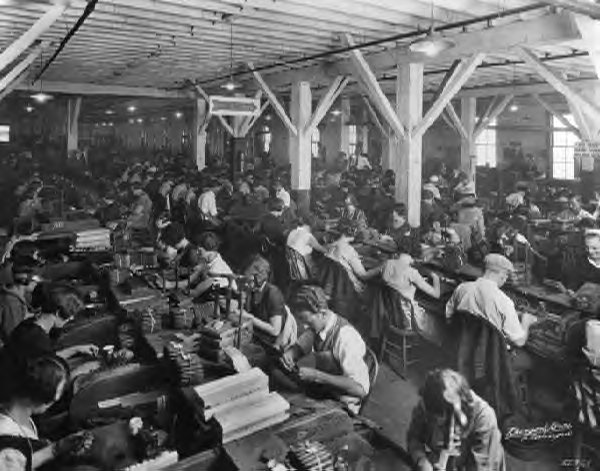 In the passed months , the Obama administration has fought to raise the federal minimum wage above its current level. There are many people who support this and are extremely curious how much longer it will take until it has passed. What has perplexed my interest is what economists have to say about the minimum wage. In my government and economics course we had a brief period discussing over why price floors are destructive to the efficiency of production.
When the government raises price floors. They are intended to increase the money in workers pocketbooks. This in turn gives them more money to be spent elsewhere. Unfortunately, that is not the case, rather than creating a profitable working class it creates one that struggles to find employment. If the price floor is higher than equilibrium, then we find ourselves and excess in supply. Meaning that employers demand less workers because they are at a higher price. In fact, if the Obama administration gets the minimum wage at $9.40, there will be an estimated of 450,000 jobs lost. This will cause a huge hit to our finally stable employment.
 Although it is probably best to keep the minimum wage where it is, there are some who want it gone for good. After all, companies are not just competing for customers, but for employees too. If you are a worker, you will go with the company that offers you the best deal. So in a way, the market also affects wages. Just as I mentioned earlier, if the minimum wage increases, you will most likely see unemployment rise. That is a sign that the market wants labor at a lower price. So naturally workers will accept a lower price so he could be employed. This will push the market back to equilibrium, and have the economy operating at maximum efficiency.
Another way to understand the effect of excess in demand is America’s college situation. We have such a large number of graduates seeking to enroll in college, yet they cannot make it because they are not the most qualified. This has caused ACT and SAT scores to rise astronomically. There are now so many students ready for college that there are not enough students to fill their place. With the standard of admittance rising, the lower income families who cant afford to send their kids to fancier schools so they can get a better chance at admittance. All this happened because there were more students ready for college than spots available.
Our economics course really opened my eyes. I understood the fact that government intervention is best when it is as little as possible, but I never understood why. Perhaps the reason why Obama and most of america wants a higher minimum wage is to give a pat on the back to those who work hard and receive little. But what they don’t understand, is that if they really want to help the workers. They should not raise the minimum wage.
More to Lemonade Than Just Lemons
In Economics class one day, we took a trip town to Mr. O’s good ‘ol lemonade stand. In this hypothetical activity, we examined a lemonade stand in detail from an economic standpoint. Something as simple as a lemonade stand remarkably represents a business from an economics point of view and starting with this simple example helps to understand multiple important aspects of a business.
 The details of the stand given to us were that you have decided to open a lemonade stand in your neighborhood. Out of some boards, nails, and paint you build your stand at a cost of $20. You buy a cooler to store ice for $10. You do a bit of research and learn that paper cups, ice, lemons, sugar, and water are going to cost 25 cents per cup of lemonade. You decide to sell lemonade for 50 cents a cup.
From that simple hypothetical, we began by examining the fixed costs. Fixed costs are the cost that does not change no matter how much of good is produced. In this instance, they may be referred to as “startup costs”. The fixed costs in the lemonade stand were comprised of the boards, nails, paint, and the cooler. No matter what, these costs are not going to change even if the amount of lemonade sold per day fluctuates. These costs are set and are an immediate “consequence” (so to speak) of starting up a business. The fixed costs are the inevitable implementations of the beginning of a business thus earning their nickname “startup costs”. Using the fixed costs as a starting point of the business, we moved on to variable costs.
Variable costs are costs that rise or fall depending on quantity of goods produced. The cups, ice, lemons, sugar, and water, and even the lemonade itself are the variable costs in Mr. O’s lemonade stand. The variable costs get their “variable” because for each cup of lemonade the cost for the seller is going to be 25 cents. Each day, the producer is not going to sell the same quantity of goods (lemonade) so his production costs are going to differ. If he sells 25 cups he will lose $6.25 to variable costs (.25 * 25), the next day the producer could sell 100 cups costing him $25. The variable costs vary from day to day as demand varies. Thus the variable costs are factored into a business plan with regards to how much of the good is sold.
How many cups of lemonade must be sold in order to break even? What does a business have to do in order to begin making a profit? In economics terms, you break even when the marginal revenue is equal to the total costs, or the fixed costs plus the variable costs. In the hypothetical, our fixed costs were $30 and are variable costs were $.25 for each cup produced. Our marginal revenue, or the additional income from selling one more unit of a good, sometimes equal to price, was $.50 cents for each cup sold. From there it was a math equation…
Let x=cups to be sold in order to break even.
Marginal revenue=fixed costs +variable costs
.50(x)=30+.25(x)
.25(x)=30
x=120 cups

Break Even
Though a simple example, the lemonade stand represents the reality of breaking even in a business. Mr. Ostroff used the example of an actual drivers ed business idea being put into practice. Using his fixed costs and his calculated variable costs, he was able to evaluate the amount of students that would make his marginal revenue equal to the amount of his total (fixed and variable) costs. This simple equation can be applied with slight alterations if the fixed costs differ from the first year (permits, etc.) but is a simple equation that calculates how you start making profit in a business!
We continued to examine how to react to different situations in a business. We examined shut down decisions and whether or not it would be appropriate to close down the lemonade stand. If the weather was cold and rainy and your variable costs were more than your revenue, you should shutdown production. That is when you aren’t selling enough cups to cover the cost of making them you are simply losing money. This again is applicable to any modern day business, if you are producing a good and you can’t generate enough revenue to cover production costs then you will continue to lose money and the shutdown decision comes into play.

You want to avoid the downhill slope and make money
Finally, we examined the equilibrium price. The point of equilibrium in the business is when quantity demand and quantity supplied is equal. We looked at how sales would be affected by certain situations and how our equilibrium price could be found and adapted to. This is a common reality in the modern business world with competition constantly changing, prices continuously fluctuating, and situations commonly arising. We looked at the situations, and then found out what we could deduce about the equilibrium price. If you have a great day and sell-out of lemonade by lunch time, what happens?

The graph shows that the equilibrium price would be higher than her and she needs to raise her prices to avoid excess demand. She sold all of her goods too quick showing a large demand but a small supply, thus excess demand.
On the other hand, if your neighbor decides to open her own stand and sell iced tea, what would happen to the equilibrium price for lemonade? This situation is much different. The competition introduced causes the equilibrium price to be below yours. The seller needs to lower his or her prices to avoid excess supply.

All in all, this hypothetical demonstrated something that people see everyday in the business world. The simple example could have represented even large business’s ways of calculating profit. The activity was successful in helping me understand the application of many of the terms we learn in economics and very helpful in providing a real life example of how the study of economics is applicable.
Won’t you take me to Appletown?
Our interactive studies of supply and demand in Economics have been engaging. Supply and demand is an interesting concept by itself, but our recent Appletown activity has made it all the more intriguing.

Source: WikiMedia
To begin, a couple key terms must be noted. Supply is “the amount of goods available,” while demand is “the desire to own something and the ability to pay for it” (Economics: Principles in Action 79, 101). Another key term used in Appletown is market equilibrium. Market equilibrium is the point at which “the quantity that people want is equal to the quantity available, and the price stabilizes” (Economics: Principles in Action 148). It is also important to note that the quantity supplied or demanded will affect the price and quantity produced of a certain good or service.
All of these concepts came into play while participating in Appletown. The class was divided into two groups of 7- one group the Producers and the other group Consumers. The Producers drew from an envelope the price at which they were selling their bushel of apples at. The Consumers drew from a separate envelope the maximum amount of money they could spend on the apples. Individuals from one group had to bargain with individuals from the other group. The ending effect was hopefully a deal between the Consumer and the Producer. The consumers’ goal was to pay less money for the apples than the money they actually had. The Producers’ goal was to sell the bushel for more than they made them for (the price on their paper). Some goals were not met because the Consumer and Producer could not strike a deal- no Consumer would pay all of his or her money and no Producer would sell his or her product for less than it was made for. This is an example of shutting down, which is sometimes the best option.

Source: Stephan Smith FX
From the Appletown activity, I can draw a few conclusions about supply and demand in Microeconomics. First of all, it is not a good idea for a consumer not to buy a product when the supplier offers a price higher or close to your income. Secondly, a producer may choose not to sell his or her product when he would be losing profit because the consumer cannot or will not pay the price that is asked. Lastly, if the number of producers in certain market increased, then there would be an excess supply of that good. The producers would sell less and, therefore, they would be keeping the price above the market equilibrium. This can also occur with an increase in consumers. An increase in consumers would result in an excess demand and the price of the product would be below the market equilibrium. The Appletown activity is a great way to put the concept of supply and demand in a realistic situation that betters the understanding of a majority of the material we covered in Microeconomics.
Apple’s Profits Drop
In our economics class incentives have really interested me. This economic term is something consumers and suppliers use everyday without noticing it. One of the major components to the United States is the US Stock Exchange. Apple undoubtedly one of the most popular electronic companies in the world. According to the Washington Post, Apple has sold more then a total of 85 million iPhones in the U.S. since 2007 launch and 34 million iPads since 2010.

Tim Cook, Apple’s chief.
Apples stocks have slowly been increasing since 1983. This past year Apple experienced its highest opening price for a share $702.10 which was seen between October and December of 2012. Since January 2013 though Apple has had some trouble with their stocks, they have slowly been decreasing in price and closed April 23, 2013 at a price of $406.13. The reason for the drop in stock prices is because Apple haven’t released any large new products since the iPad Mini and people are finding it easier to buy the iPhone 4 free with a two year contract then spending $200 on an iPhone 5.
“On Tuesday, the technology giant announced that it planned to more than double its program to return cash to shareholders through stock buybacks and a higher dividend, spending $100 billion on the effort through the end of 2015. Its share repurchases alone will increase to $60 billion from the $10 billion it committed previously, the largest such plan in history, the company said.”
The move to renew investors interest with Apple stock came as the company announced its first profit decline in a decade. Apple said its net income fell 18 percent in its fiscal second quarter, as one of the most successful technology franchises in recent years, the iPhone, showed signs of slowing down.

Apple Stocks 4-23-13
Apples announcement of the company planning to double its cash return to shareholders through stock buy backs and high dividends, is an example of incentive. Apple hopes that their new program invites investors to buy back into the company by giving them a incentive of double cash back. If successful, Apple could see another successful year like they did in 2012.
T-Mobile: The future AT&T
T-Mobile is just behind Sprint, AT&T, and Verizon on the popularity scale. T-Mobile would be on the way to success if it weren’t for all the competition. These different companies desire the money of consumers; however, because competition exists, T-mobile is offering more deals and pricing. The main difference between T-mobile and AT&T, besides the numbers itself, would be the long-term versus short-term contracts.

T-Mobile now has the iPhone 5 available.
Consumers aren’t committed as long when choosing T-mobile. This offers the flexibility to look at competitive pricing. This offers a chance for individuals whom have lost their jobs to respond to his/her financial needs.
However, some don’t see T-Mobile as rewarding and valuable. “The company has said its main problems were consumers’ negative perception of its network and its inability to offer customers the iPhone” (New York Times). IPhones are everywhere. Buyers want this specific phone simply because it is useful and it seems as if everyone owns one. T-Mobile doesn’t want buyers to substitute them for Sprint or Verizon. To avoid this, T-Mobile has made a deal with Apple and turned on the LTE network. “Apple iPhone 5 would be available starting April 12 for $100 up front, with customers paying an additional $20 a month for two years. Other new smartphones, like the Samsung Galaxy S 4 and the BlackBerry Z10, will be available with similar payment plans (New York Times). T-Mobile has made advancements due to competition and will make more developments in the future.
According to John Legere, individuals should choose T-Mobile over other companies, because this corporation is straightforward. People would know what to expect; there are no surprises. “Mr. Legere said that over two years, an iPhone on T-Mobile would cost $1,000 less than it would on AT&T” (New York Times). In his mind, there is no question about it; T-Mobile is more sufficient. But, buyers’ self-interest and preferences also matter. It could be easier to be on a long-term plan or there’s the possibility of AT&T having more appropriate prices.
This relates to the Appletown Simulation in class. Just like there were multiple producers, there are varieties of cellular companies to choose from. Consumers, or buyers, decide which company to choose from by looking at prices and self-interest. Naturally a potential customer will examine prices and choose the lower price. Self-interest can change a decision between AT&T and Verizon. Self-interest can change a decision between green apples and red apples or large apples and small apples. Buyers can use the substitution effect anytime. If T-Mobile isn’t going well for a user, especially considering it is short-term, he/she can investigate in an alternative, such as Sprint. If a producer in class was charging too much for a basket of apples, he/she can turn to another producer who has a reasonable price. Anyone can be replaced.
In my opinion, I would want a short-term contract. I would feel more comfortable and secure in case something was to happen with my financial stability and I couldn’t pay for my phone anymore. Corporations try to win people over with the “unlimited texting” or “unlimited minutes”. For me personally, I would need unlimited texting. That is a way a company would buy my interest. The minutes aren’t as important to me, so unlimited minutes with T-Mobile isn’t an advantage or disadvantage. Also, when I was in late-elementary school and middle school, I would buy a new phone almost every two years, sometimes more. A short-term contract would be more beneficial so I could change phones or even companies.
Rent Control in New York City
In our studies so far in Economics, price ceilings have interested me. These well-intended government actions often have unforeseen negative consequences. In this post, I will explore the effects of price ceilings, specifically on housing in New York.

Price ceilings are programs implemented by the government that dictates the maximum price that something can be sold for. In the case of apartments, this is called rent control. In New York City, rent control keeps prices low for long-time residents and controls price increases for regulated apartments.
This practice, in theory, should serve to help lower-income individuals and families afford housing in New York City despite skyrocketing demand. However, the fact that the current laws keep the price of apartments below equilibrium creates dangerous repercussions.

The first consequence of rent control is the creation of a shortage. When lower prices are mandated, apartment suppliers are unable to make as much profit and may be discouraged to the point of leaving the market, causing a downward shift in quantity supplied. Additionally, the lower prices bring about an upward shift in quantity demanded. These two factors combine to cause a shortage of apartments.

Another consequence of rent control is a decreased incentive for suppliers to improve their product. Because they are forced to rent apartments at a lower price, leading to decreased revenue, landlords have less reason to spend money on improvements to their units and buildings. In fact, regulated buildings in New York City are 9% more likely to have become structurally unsound than similar unregulated buildings.
Overall, while price ceilings may help provide housing to individuals who would not be able to pay the market price, resisting the invisible hand of the market and setting prices below equilibrium certainly comes with tradeoffs.
Shortage

This photo is an example the difference between scarcity and shortage, each of these products are scarce in the terms of a limited quantity, but the photo shows what shortage looks like.
Shortage

This photo represents shortage that we discussed in class. The single muffin represents the limited resource for an unlimited want, but it is a shortage because the cookie cabinet will be restocked
Competition

This photo shows competition and how the brokers are trying to buy a certain stock first because there are limited stocks and many people who want one.
Wants and Needs

This photo represents the wants and needs discussed in class. The water is what I need to survive, but the iced coffee is what I want.
ParishECON

Steps to Post:
1. Create New Post (top right gray ribbon);
2. Click on ‘Pop Out’ (bottom left);
3. Click ‘Photo’ – choose title, add photo (centered, please), and write analysis (2-3 sentences).
4. Add tags – select an ECON concept from our class list.
5. Add categories – 1) PhotoECON and 2) class section (A1, A3, B1, B2).
VOILA!
The Crabs are Running Out!
 Although out time in economics class had been short so far, it has been truly interesting. We began by talking about crabs in the Chesapeake Bay, an important current event for crab fisherman, middle men, and crab eaters. The problem is that there is a shortage of crabs in the Chesapeake Bay, and the fishermen are fishing them at a high rate. Soon the numbers will dwindle and the prices will skyrocket. There are many things to think about in this subject, from scarcity to cost and benefit to opportunity cost, a decision must be made.
We begin with the crab fishermen, who are having both positives and negatives. The positives are the price of their goods, or crab is going up, making them more money. However, many problems are occurring. The first problem is the scarcity of their goods. The crabs are running out. The fisherman must go further and further out in order to fish enough to make enough money, and must consider cost and benefit. The cost is a longer day with more gas or fuel wasted, while the benefit is more crabs, meaning more profit. The crab fishermen are also having trouble with the middle men, the people who buy crabs from the fishermen and sell it to the restaurant. As the prices in the market are going up, the middlemen must bend prices in order to make enough profit. They are having arguments with the fishermen about fatality rates of the crab, and the prices are changing for them. The middlemen have an opportunity cost with the crab fisherman. They are choosing to overcharge, perhaps ruining their ties with the fishermen. This is positive in the short term but perhaps damaging in the long term. Also, the restaurants are in a bind. They must compete with high crab prices, deciding whether or not to spend the money on the crab or not. Some customers are definitely going to eat crabs, while others are being cautious and deciding they don’t want to spend the money on them. The cost is just too high for some customers to continue eating them regularly, perhaps hurting the entire crab market.
The capitals of labor are also evident in this problem. The land, or the sea, is seeing declines in crab population. This shortage is affecting everyone, and the fishermen must decide whether or not to make money in the short term and continue fishing heavily, or gain money in the long term a slow down to let the crab populations to recuperate. The labor is also evident, as the fishermen are doing labor by catching the crab, the middle men are doing labor by buying and selling the crab, and the restaurant owners are deciding how much crab to buy in order to make as much profit as possible. Capital is also evident, such as the boats and cages and other manmade objects. These factors of production are very evident in this topic, and are greatly influential over the entire problem.
The three economic questions are also being answered. The first, or ‘What goods and services should be produced?’ is answered by the crab fishermen, who decide how much crab to catch in order to not waste too much while still gaining as much profit as possible. The second- ‘How should these goods and services be produced is also answered by the fishermen, deciding how to catch the crabs without getting too small or not enough of them. The third is easily answered- ‘Who consumes the goods and services?’ The consumers are the people who go to the restaurants of course; however they are perhaps the most important. Without the price or quality being just right, the customers could easily stop eating the crab, disrupting the while market. They are the most important when answering the three key economic questions.
 Economics has taught me how our economies work, as well as other economies around us. From scarcity to opportunity cost, making decisions is tough but necessary, and economics class is helping to teach me to make the right decisions. Although the crab market is in trouble, it is up to the components of the market to make decisions to fix it.
Amazon vs eBay:In economic terms
The recent wave of online shoppers has created hot debate over which online store is better, eBay or Amazon? Both are very similar. Both are online stores are where sellers can operate their business out of and where buyers can buy a plethora of goods out of just one site. But which web-site do consumers and businesses recommend? It all depends on the most you could get with the least of your resources. Or in other words they are trying to make the most cost-efficient decision to fit their needs. What sellers need to think about is the cost it takes to sell an item on either site. According to Economic-times, “It costs $3.92 to sell a $10 item on Amazon and $2.72 on eBay” Economic-Times.

Costs and Benefits
This is one thing to consider but they also say that, “eBay takes more time and most merchants store inventory themselves” Economic-Times. In making these decisions, retailers make trade-offs; sell out of Amazon without having to stock your own inventory which is easier and faster at a higher price, or sell out of eBay being less efficient and having to stock your own inventory but at lower prices. These economic trade-offs are decisions suppliers need to make, and it all depends on what they value more, time and efficiency or money. Consumers also make decisions that involve trade-offs when considering buying from wither online store. If a consumer buys from Amazon, they are most likely making that decision based off of the convenience and quickness the company provides for its customers, rather than considering the price compared to eBay. A customer choosing eBay most likely chose this alternative site because of its lower price, not valuing time and efficiency as much as they value money. But most consumers value time and efficiency over cost. This is why their choice is usually Amazon. Vice President of Amazon’s FBA business, Tom Taylor says, “Customers like lower prices, but customers also like greater convenience, faster shipping and great selection” Economic-Times. Consumers also state their opinion on consumer surveys on squidoo.com. They say that, “If we were going to choose just one to live with for the rest of our lives, we’d pick Amazon. Why? It’s easy to shop there, the items are always represented correctly, checkout is a snap” Squidoo. The experience is also a major factor for buying things at either store. According to Clark Howard of CNN, “In their testing, the best overall experience for shoppers – not necessarily always the lowest price – was amazon.com.” CNN. It is clear that these consumers weigh the cost and benefits.

Pros Vs Cons
The cost of choosing Amazon is more money for their product, while the benefit is the efficiency, simplicity of getting the product bought and delivered, and the overall experience. In my economics class we have studied these terms used to describe the economic process that consumers and producers use. By applying these terms to the choice between buying and selling on either Amazon or eBay, it is easier to decipher my specific value of time and efficiency versus money.

Making Decisions
I have always bought from Amazon because of its simplicity and efficiency. Although the cost of buying from Amazon is the higher price (compared to eBay), the benefits are efficiency and good experiences. The trade-off of this decision is buying from eBay with a lower price, but without a good experience. These decisions are small but are indeed involving economic thinking. By studying economics in school, I am able to apply my studies to everyday decisions, helping me make the most cost-efficient decisions possible. These terms I have learned to describe my economic decisions have given me the possibility to break down the economical processes people and I take, helping us see the best possible, cost-efficient decision to make for our benefit.
Nuclear Productivity in Israel
 According to CNN, before the president’s first trip to israel, President Obama addressed the israeli government to cease nuclear production or face further isolation from the U.S. President Obama recognized that clearing the past and present disputes is much easier said than done, as well as recognizing the strong mistrust. He goes on to say that it will take quite a long time to fix all things between the two countries. In attempts to gain some of the israeli public Obama stated that their government was detrimental inside the countries border. Obama also was worried about their civilians having all the rights they are deserving of. Obama still searches for a diplomatic solution to the touchy relationship of the two countries. Obama visiting Israel will help the relationship greatly showing an “olive branch” attitude.
Obama’s actions indicate that he isn’t intending on having another military conflict. Any new military conflict would cost money that the U.S. doesn’t have. If israel continues nuclear production the threat will increase and thats the last thing Obama wants. He is choosing a diplomatic and peaceful way so that no aggression will be shown. While being peaceful and diplomatic Obama is also criticizing their government saying its detrimental inside its borders. By choosing to present an ultimatum to israel with the “isolation” statement he is sacrificing the relationship with israel.
In this decision to resolve this matter in a peaceful way Obama is giving up his decision to go find the nuclear activity and stop it, this is a trade-off. He trades off having a sure stop to the threat of nuclear production for saving lots of money and being diplomatic. He was also thinking about his marginal benefits by seeing that by being as humble as he could he would get his desired result. This also has a side of opportunity cost because by both options being desirable it makes his diplomatic decision a result of giving up the other costing him that decision.
Ethanol: Food vs. Fuel

Ever since global warming has become a major crisis, the world has sought a new alternative for fuel. They looked to ethanol to become a common source of fuel. Ethanol is great for the environment, but the problem that it is sourced from corn crops has become a dilemma in the U.S. Deciding what to use the corn crop for: either to produce more corn or more ethanol is in question and needs a solid answer to decide the future of fuel.
The U.S. ended up choosing to produce more ethanol, which was established from the policy made in “2005 when Congress set requirements of corn to be used for automotive fuel. In 2007, the Energy Independence and Security Act greatly increased those requirements to improve air quality and become more energy secure”(McDonald). The U.S. is now the world’s largest producer of ethanol followed by Brazil, which is the world’s top user. The United States used “44% of this years corn crop” to produce ethanol (McDonald). The United Nations, though, has asked the U.S. to ease its ethanol mandate. The reason why is because the U.S. is in a drought in the Midwest region and this has caused food prices to go up. The United States is also the “world leading producer and exporter of staple grains” and these crop shortages are affecting global markets (McDonald). In addition, the only reason ethanol policy was created was to reduce the greenhouse gasses, but the “irony is that a study done at Princeton suggests that corn ethanol does little to reduce greenhouse gas compared with gasoline”(Cendrowski). Nevertheless, ethanol is now only created as a way to make income and has caused a problem with the worlds food supply.
This current issue relates back to our economics class for multiple reasons. There is a shortage of the corn crop due to the drought and it is being utilized for split resources. Another example that this relates back to class is because this concerns a trade-off for the United States. The trade-off is to either use the corn crop to generate ethanol or use it to produce food. Citizens believe that they are using too much on ethanol, even though there is a higher percentage of food being produced. This dilemma is also portraying how the United States is a mixed economy. Privately owned businesses that produce corn crops are given guidelines how much of the resource should be manufactured for ethanol and how much allocated for food. In my opinion, the laws will need to be revised to accommodate the current scarcity of crop being produced because food supply is a higher priority than fuel.
The Customer is Always Right
 Every business is built based on an owner’s incentive to make a profit. However, economic decisions are just one of many obstacles that plague business owners. In After a Blizzard, What’s a Fair Price for a Shovel, Rafi Mohammed explores a topic that affects businesses economically and morally. Here is the scenario he poses:
“Suppose you own a hardware store. There’s been a heavy snowfall throughout the night and you know the moment your store opens at 8 AM, the limited supply of snow shovels will sell out. Should you raise price?” (Harvard Business Review)
In essence, since people must clear the snow from their driveway, demand for shovels after a storm increases. However, since so many people are in need of a shovel at one time, there is a shortage of shovels, meaning there are not enough shovels to sell to all of the people in need of the product.
After presenting the inquiry, Mohammed continues by adding a list of questions to consider:
“If price is held steady, is it fair that those who show up right when the store opens get to purchase at less than the market clearing price? What about those who can’t arrive at 8 AM because they are working or tending to children? Or should the storeowner follow the mantra of economists to raise price until the market clears? In other words, allocate the limited supply of shovels to those who value them the most (i.e., are willing to pay a high price)” (Harvard Business Review).
 Given that there are a variety of different options as to how these questions can be answered, business owners choose what they want to do after weighing the opportunity cost of each decision. For example, if a storeowner was to sell the shovels only to the people who will pay the most for them, many shoppers would stop peeping into the store. Some people would rather see prices at a steady rate, so if the owner wants to exhaust his or her customers of all their cash, many shoppers will buy from a nearby competitor. A business owner must realize that his own self-interest lies in the hands of the consumer.
Next, Mohammed moves on to present more issues that plague a storeowner when contemplating raising shovel prices after a storm:
“Is it worth it to potentially alienate customers for a quick profit windfall? Or, to take another view of the situation, if storeowners take the risk of purchasing a large inventory of shovels for the winter season, don’t they deserve to profit? After all, what if they purchase too many shovels and have to liquidate inventory at the end of the season at a money-losing price? If that happens, how many customers will say, “I’ll pay you more than the clearance price because I appreciate that you had shovels ready in case of a blizzard?” Nada. Is it fair to store owners to take all of the risk but not fully profit from their investment?” (Harvard Business Review)
 In his array of questions, Mohammed makes some intuitive assertions. He is correct that there is a major possibility the storeowner could end up not profiting from his or her investment in shovels if prices are not raised. However, since “the customer is always right,” storeowners must be prepared to take a hit from a bad investment. The United States operates in a free market economy driven by consumer sovereignty; if the consumer wants to buy a shovel, sell him one. If there are not enough shovels to sell, get more. The benefit of living in such an economy is that there is always ways to modify a product or policy to increase the potential earnings of a business. Whether it’s changing the specialization or fighting off competitors, every business always has ways to improve. However, no business will ever flourish if it does not satisfy its customers.
In conclusion, a storeowner must not raise the price of shovels right after a storm. While the extra cash seems appealing, it is neither fair to the consumers nor beneficial to the business to raise the prices. Satisfying the consumer must be a business’s number one priority in order to earn a hefty profit.
The Foundations of Economics
When a disaster strikes a community, there is always a frenzy for resources. In the case of a blizzard, many people might go without power, water, or food. The consistent event of natural disasters poses a problem for all societies. Understanding economics can help with responses to disasters and also give insight to how a group of people functions in the inevitable event of a natural disaster.
To start off, Economics is the study of how people seek to satisfy their needs and wants by making choices. In the case of a blizzard, an economist would look at how a consumer or city would work to satisfy the need for resources. The problem with resources is that they are scarce. Scarcity is the offspring of constant wanting by consumers. There are only limited quantities of a resource, but constant demand. This is different than a shortage, where a resource is only unavailable for only a period of time. Scarcity is always a given, and never ending, while shortages are only for a period of time. In the case of a blizzard, shovels might enter a period of shortage driven by a natural disaster.

The Factors of Production
Looking at where the shovel actually comes from and is made involves the factors of production. There are three categories of the factors: Land, Labor, and Capital. The materials used to make the shovel come from the land, or any natural resource used to produce a good. This includes the wood for the handle, or the steel for the blade. The shovel is assembled by people; the labor factor. And finally, the shovel best associates with the capital factor because it is a human made item used to produce other things more efficiently. The shovel efficiently helps a laborer get rid of fallen snow. These three ways of producing goods are an essential backbone to economics because they give an answer to where products come from.
When a blizzard hits, a society has to think of the trade-offs they will do. Trade-offs are basically all the options a person has when making a decision. Because items are scarce, and sometimes go through a shortage, people can not choose every option they have. This might mean spending money on an expensive shovel, or buying food and water. The opportunity cost is a type of trade-off, but it is classified as the second best choice that a person could choose. A person could buy the shovel, but they must weigh the opportunity cost of not having enough money to buy food and water. Additionally, a person thinking at the margin who is buying food will weigh the costs and benefits of buying one more waterbottle, or loaf of bread. Thinking at the margin is making a decision on buying one more unit of something.
Depending on the type of economic system one has, the different ways a society will respond to a blizzard. An economic system is the method used by a society to produce and distribute goods and services. There are four types of economic systems: traditional, market, command, and mixed. Examples of these types include African tribes (traditional), Hong Kong (market), North Korea (command), and the United States (mixed). If the blizzard hit the United States, the government and the normal market will work together to approach the issue. Because the government is a mixed economy, the term guns or butter arises. Guns are essentially used to associate with a government’s military costs, while butter is consumer goods. Hopefully a government would choose butter over guns, and help a suffering society. Safety nets come into play when a person faces economic struggles. If a person becomes injured during a natural disaster, an ambulance would arrive to help the person. Safety nets are important because a society does not like uncertainty. These nets, in advance, protect people in the case of an accident.

The Components of Adam Smith’s Invisible Hand
Thinking all the way back to the shovel, everything comes down to the consumer. Economies are driven because all people have self-interest. Self-interest is exactly as it sounds, doing something for one’s own profit. If a man’s driveway is covered in snow, he will go buy a shovel to help himself. Additionally, self-interest motivates a market economy because it controls prices; most gain for least amount of money. Competition is the rivalry between two producers trying to gain consumer’s money. Competition is the regulating force behind an economy. If there were only one store in a city that sold shovels, the owner could potentially raise prices to whatever he or she wanted to because their store is the only place to get the item people need. However, due to self-interest, if there is a competing store nearby that also sells shovels people will go to the store with the lower price. The two stores balance each other and keep each other’s prices low. This is an important part of the self-regulating economic system. The two forces, self-interest and competition, working together make up what is known as the invisible hand. Invisible hand is a term coined by Adam Smith to establish that drive behind a self-regulating market.
Overall, understanding how economics work is an essential part to the survival of a community. It is important to know how to respond to any disaster, and economics helps a society figure that out. A blizzard is only one example of how to relate economic terms to a situation. In class, we read about the crab market in the Chesapeake Bay. We took that example and matched up the economic terms with the situation. From this we learned why there was a problem, who it effects, how to respond to the issue. It was not a coincidence that the foundations of economics matched up with the story; these terms can apply to everything.
Understanding the Free-Market

Source; Cartoon Movement
Under Adam Smith’s view, the metaphor of “the invisible hand of the market place” describes the self-regulating behavior of the market because of two factors: self-interest and competition. Free markets are the fundamental connection in exchanging things, such as products, between buyers and sellers. Free markets came about because no one is self-efficient. Parts of society must specialize into a concentration of a small number of productive abilities. Therefore, specialization of a specific product or products requires exchange in order to meet needs and desires. This exchange requires the free market to be the connection of society through transactions in the market. This market works through the cooperation of competition and self-interest. The pursuit of self-interest in the market is a benefit to individuals as well as the country. Self-interest requires businesses to be competitive with other businesses for profit. This ideal is the reason why the market is self-regulating with no government intervention. This self-regulative nature is why Adam Smith coined the phrase “the invisible hand of the marketplace.”
Self-interest plays a crucial role in the free market because it not only benefits the individual, but society as a whole. In Adams Smith’s Wealth of Nations, he states that “By pursuing his own interest he frequently promotes that of the society more effectually than when he really intends to promote it.” The term “invisible hand” describes the nature of self-interest in a free market. Adam Smith argues that self-interested competition keeps prices low. The pursuit of one’s own gain creates a demand for competition between businesses or individuals. This indicates that the free market is self regulating and, therefore, government intervention is unnecessary. However, in pursuit of one’s own personal gain, consumers have the incentive to search for lower prices, consequently leading to the important aspect of competition.
On the opposite side of the spectrum, firms compete with each other to sell their products to consumers and make a bigger profit. If a firm sets the price of a given product higher than the price set for the same product by another firm, sales will increase for the firm with the lower-priced product. Consequently, the struggle to make profits ultimately forces the higher-priced product to drop the cost to better compete with other firms. This action begins a pattern that ultimately leads to a price similar to the cost of producing it. This circumstance is why Adam Smith coined the phrase “the invisible hand of the market place.” This is why the free market is self-regulating. Self-interest motivates consumers to get products at a lower price, and firms will react with competition to the self-interest of individuals, thus self-regulating.
I found this topic very interesting because I better understand what keeps the free-market going. Since free-markets do not require government intervention, I have always wondered how the market regulates itself. Understanding the two factors of self-interest and competition helped me see how the free-market is self-regulating. This leads me to believe that the U.S. government should not intervene when society may work more efficiently on its own. It was fascinating to learn that free-markets can regulate themselves because of human motivation and competitive nature. Although there are many other types of markets, free-markets stood out as the most interesting of those we have studied in class. I understand that the United States is a mixed economy, not merely a pure free-market nor a planned economy, but somewhere in the middle. Therefore, seeing how a pure free-market economy flows creates a better understanding of how the United States economic system works, excluding the aspects of a planned economy.
Which will you choose: Samsung or Apple?
 Apple, the powerhouse of top consumer electronics, is finally getting some competition from another company. Apple has never had to deal with a challenging company that was able to produce a profitable and popular smartphone or tablet until the new upcoming company Samsung Electronics. The Galaxy S III smartphone is the first smartphone to compete in sales with the Apple Iphone. Since Samsung produces phones and tablets they have now became a potential challenger to Apple. Theses two companies are the top two that are making turning profits in the in the highly competitive mobile phone/tablet industry. Apple gets a whopping 72 percent of the earnings while Samsung gets the rest of the profit.
These two companies control the marketplace for these products. With this competition Apple now has to lower prices and produce new smartphones and tablets quicker so that they can compete with Samsungs products. Samsung does not only just produce phones and tablets but they also produce other goods like computer chips, flat-panel displays, refrigerators, washers and dryers, cameras, vacuum cleaners, PCs, printers and TVs. Both Apple and Samsung have a different approach with dealing with the marketplace. Apple approaches the marketplace by creating new markets and dominating them like they did with the iPhone and iPad. While Samsung invest more into studying existing markets and produces a new product inside that specific market. Vice president of Samsung, Kim Hyun-suk said “We get most of our ideas from the market….“The market is a driver, so we don’t intend to drive the market in a certain direction.” Apple has a different outlook on the marketplace the founder of Apple Steve jobs doesn’t believe in investing into market research; he says that consumers don’t know what they want so that’s why he has to tell the consumers what they want with his products.
Apple and Samsung couldn’t be any more different from the way the do research to the way they manufacture their product. The factors of production in Samsung are very different compared to Apples factors of production. By Samsung investing in research and development they were able to produce a product that had a bigger display screen of 5.3 inches. The opportunity cost of investing more in research and development is that Samsung could have used that money on something else like producing more product or in advertising. They learned this by listening to what consumers want on the next smartphone. Samsung Electronics has a slightly bigger revenue than Apple but Apple is larger in stock market value. Samsung has 60,000 staff members that work in 34 research centers across the globe that sees what the consumer wants and what trends are big at the time. Samsung relies on Consumer Sovereignty because they are persuaded by the consumers to produce a product based off what they want.
Samsung unlike Apple remains a manufacturer while Apple contracts out the assembly of its devices. Samsung has built its business around producing and selling components to other manufacturers including their competitors Apple, Sony, and Hewlett-Packard. Apple buys many components from Samsung like flash memory processors, graphic chips, solid-state drives and display parts. Apple uses these parts to include them in their own products like the iPhones, iPads and iPod Touch devices and MacBooks. Both companies are look to produce the next big thing. All we the consumers have to do is wait and see which company does it first Samsung or Apple.
Prepare for the Worse and Hope for Better!

Secretsofthefed.com
According to the United States Department of Agriculture in January 2012, a moderate cost food plan to feed a family of 4 weekly expenses were approximately $217.65. In January 2013, the United States Department of Agriculture found that a family would be spending an average of $220.70 a week to support their family now. Last September, the United Nations Food and Agriculture organization announced “on average, [food] prices rose 1.4 percent.”
The price of food has risen because of a shortage of food. The recent droughts have made production of wheat, rice, and corn scarce. Throughout 2012, food prices have fluctuated. Food prices have even started to “level off” now.

blog-imfdirect.imf.org
To prevent this shortage from making dramatic hikes in food prices, there is a demand to produce more cereals. They are currently trying to increase the production of wheat, rice, and corn. Last winter, there was a 1% increase in wheat planting and despite those efforts the global droughts have made these crops more expensive to obtain. People are having to think at the margin as prices continue to rise. They need to decide what is necessary to buy with the last of their money to feed their family. The consumers also have to consider the opportunity cost of buying these goods at their high price and which ones to buy. The food prices in 2013 are expected to rise 3.5- 4% increase with the help of these droughts.Producers of our goods such as meat have been looking for cheaper sources to feed their livestock to keep the expenses to a minimum. Even though all these efforts have been made there is no way to stop these hikes First, the Fiscal cliff seemed to be the biggest issue but now it appears that it is food.
So many jobs, so few people…
Economics is the study of choices and, more importantly, people’s choices. Every day, people make the decision to eat at one restaurant instead of another, or to buy one item from a store instead of saving for something else. Choices are made constantly, although their impact on our lives vary. However, the consumer market is not the only place where people make choices. People can also make decisions about what they wear or what kind of job they want. People decide by weighing the costs and benefits of their actions. Costs are what a person is willing to give up for the benefits of their decision. The factors in making a decision for many people include wages, hours spent working, and how much they like the work. Normally, how much they will get paid is the deciding factor, and enjoyment comes last. But for Mary Healam, the wages aren’t as important.

Mary works as a home health care aide, one of the fastest growing jobs in America. With almost 2 million jobs and expecting to increase to 3 million by 2020, home health care is also one of the lowest paying despite the high demand from the baby boomer generation. The sudden influx of health care patients has caused a severe demand for workers. Yet they still get paid below minimum wage due to a loophole in the Fair Labor Standards Act of 1974. Before she worked as an aid, Mary worked at a department store, which according to her, paid more than her current job. So why does she do it? Mary states that the job is rewarding enough. To her, the benefit of caring for the elderly outweighs the forgone income.

Most people don’t see it that way. For them, the most important factor is money. If the job paid more, then more people would work as an aide. There is already a shortage as it is, but with low income, fewer people are willing to do this job. Only a small percentage find that the emotional and spiritual benefit outweigh the need for food stamps and Medicaid. Other aides are usually minorities or foreigners. This is one of the few jobs they can get with minimal training. Additionally, many workers don’t work full time at this job becuase they have other jobs. Even then, with many of the part-time aides, money is most important. Mary Headlam is a rare person. She goes against what drives so many people in the economy. Whether it is buying the cheaper shirt or getting a higher paying job, the ultimate driving force is money and wealth. Mary left her job at a department store, even though it paid more, because she didn’t enjoy it. But most people are willing to give up their enjoyment as a cost of a higher paying job.
If the government raised the wages in healthcare jobs, more people would want the job and the shortage might go away. But that isn’t likely to happen; the government can’t pay the Health Care Aides a higher wage so the shortage is still present. It isn’t because of the demand created by the baby boomers, but because the government simply isn’t willing to pay more. There are so many jobs, and so few people willing to commit that amount of time and effort without ‘material’ compensation; emotional satisfaction just isn’t enough.
Waistline size affecting the Economy
What would happen if drinks that were more than 16- ounces were to be banned in Texas? Kind of hard to imagine, but have no fear Texans! The ban was not proposed for Texas, but for New York. The reason for this ban was to help the obesity rate in New York to go down. Obesity is a big issue in the United States considering about 68.8% of the
 population is obese. Although this ban did not pass, the possibilities of what could have happened if this ban did pass are endless. The economic problems that could have risen from this ban could have been bad.
In our class, we learned about the difference between a want and a need. A need is something that is necessary for survival. A want is something that is not necessary for survival. It’s obvious that large, sugary drinks are wants. Who needs these huge drinks to survive? This is part of the reason why this ban was made in the first place. These large drinks are not needed for survival. If these large drinks were to be banned, then the obesity rate might go down and then maybe the medical problems associated with obesity would go down as well. This ban was made with the idea that it could help save lives.
The ban would have forbid sugary drinks larger than 16 ounces in restaurants, movie theaters and other food establishments. If this ban had passed, there would have been a few trade offs. One trade off would have been that in order for the obesity rate to go down, restaurants would have to just accept that the money they would have made with these large drinks are now gone. The money made from these drink that are more than 16-ounces, where the drinks could have been banned, could have helped the establishment.
 When the mayor proposed this ban, he basically had the size of people’s waistbands in his mind. While his idea was not that bad because he cared about people’s health, the mayor could have approached this issue of obesity in a different way. Banning these large, sugary drinks means that money that could have been made will now not be made. That money could have helped the economy. Back in our class when we were studying about the government, we had to come up with possible solutions that could help solve the fiscal cliff. In my group we discussed the possibility of taxing the food and drinks that are sugary. Basically, taxing all the junk food and drinks. To solve the problem of obesity, the government could tax the junk food and sugary drinks. Some people may not want to buy the food and drinks if there was a tax on them. Then again there might be some people who don’t care about the tax and just decide to buy the junk food and sugary drinks. So whenever these people buy these products, they can help the economy. This solution can help with obesity and the economy. It’s like killing two birds with one stone.
I Want! I Want! I Need!
In economics class, we recently learned about the difference between “wants” and “needs”. This difference should seem obvious to most, but the fact is, most children today seem confused about that difference. Parents are partially to blame because they are not modeling the difference between recognizing what is a “want” versus what is a “need”.
Imagine a mom and her little girl walking into the mall. The first thing the child “wants” is a doll she sees in the window. She explains to her mom that everyone has one and that she “needs” one to be like the others. Being a good mother, the mom explains that the child does not “need” things in order to make friends, she just “wants” them. The child is upset and crying, but it is a lesson learned… or is it? In the next store window, the mom sees that the Apple Store has the IPhone 5 in stock! Of course, the mother has been “needing” to buy one since it came out, but the stores have been out of stock, so she is thrilled that she can buy one immediately! Therefore, she goes in, daughter following, to buy it even though she already has a working phone. She is giving her daughter mixed signals; she tells her daughter that she does not “need” a doll, but acts as if she “needs” an IPhone 5 even though her daughter will realize that she does not truly “need” the phone, but simply “wants” it.

Kids learn by examples, not by words. How often have we been told one thing but taught another by our elders? This isn’t a new concept. Everyone knows that children follow the examples of those that they admire. If parents do not teach their children the difference between “wants” and “needs” by their examples, how can they expect the children not to grow up as a nation of spoiled children. Necessary needs are “the obvious things that every person needs to stay alive. I include food, water, shelter, and not much else in this category. These are the things without which we would not be alive.” Wouldn’t the nation be a better place if, instead of spending eight hundred dollars to have the latest and greatest technology, that same money was spent on others that truly can’t afford their own needs (food, water, clothing, shelter).

“According to one poll, commissioned by Time and CNN, two-thirds of American parents think that their children are spoiled.” Why is that? I believe it is because children are getting what they “want” far more often than just what they “need”. Compare children in the U.S. to those in needy countries. No one will argue that the attitudes of children in countries that struggle simply to meet true needs of their citizens differ greatly than the attitudes of American children. We are a wealthy nation and are able to give children far more perhaps than their parents had growing up. On the surface this may seem like a good thing, but we have to analyze how this excess is really affecting them. Are the children grateful for what they have, or are they exhibiting a sense of entitlement?
“Children need our love, attention, acceptance, support and time. Our kids want but do not need computer games, iPods, Facebook, sleepovers and ultimately get their driver’s license and go to parties and concerts.” Maybe if parents spent more time with their children and modeled donating their money and efforts to the needy versus to the Apple Store, we would be fostering a different generation of children.
Intro to Economics

Source: Canterbury
The Government and Economics course I am currently enrolled in has been more beneficial to me than any other class. In Government we learned about things like the electoral college and the voting process. In Economics we have started to learn things like the differences between scarcity and shortage, what an entrepreneur is, and what marginal thinking is.

Sources: 123rf, Fiskars, Maria’s Movers, and Fox News
The first day of the trimester we did a stimulation activity that required us to build the tallest structure from 10 straws, a piece of tape, a piece of string, and one pair of scissors. This activity helped me better understand the difference between land, labor, and capital which are the three factors of production. It also forced us to use marginal thinking because we had to decide whether we wanted to use another straw to have a stronger base or if we wanted to save that straw so we could have a taller structure. We were forced to think marginally because at the time, our products were scarce.
I learn better by doing, so activities like the straw building help me a lot. They help me better understand the terms for the class and they are fun.
Gun Control
The reason that the idea of gun control exists is fear. Fear of the unknown and fear that the government can’t protect its citizens. Gun control is an attempt to stop gun violence in the U.S and to reassure its citizens that the government can still protect them. This idea is too farfetched. Most people would agree that a gun in their house is reinsurance that if someone breaks in to their house they might have a weapon to defend themselves.
 The government failed at trying to make the people support this idea because the world is filled with uncertainty. If the government tries to even ban guns the people who commit crimes will always find a way to get them. The fact that many people can still get drugs is evidence that the government cannot stop smuggling. Then the “bad guys” would have guns and the “good guys” would have what…swords? O yea that is defiantly going to end well for the good guys. The government would have to restrict certain freedoms, such as YouTube and the gun fanatics like FpsRussia. They would also have to define when one can walk outside, to make sure that nothing bad happens to the citizens. Clearly, this is opposed by a lot of U.S. citizens.
Personally, I think that government is going about this in the complete opposite way, what if the right thing to do is support more people with guns. If more people are allowed to possess a concealed handgun, then our streets would be safer. Think of it this way, if someone walked into a theater with a Kevlar vest and a fully automatic rifle and twenty citizens pulled a gun on this person, then this person would probable surrender. Now obviously there needs to be a better class for concealed handguns, but if government is supports more people to own guns, then crime rates would reduce. However others think differently, like in my government class. Some of my fellow students think that the government can fix this dilemma, and my government class has taught me to see both sides of the story. So, yes the government could fix this troubling state, but it would be difficult from the statements made above. The government would need to completely change its image. Furthermore the “Local and national authorities need to find ways to assure Americans that a safe society is one in which well-trained law enforcement is the best answer to controlling crime and assuring safety.”
Gun control is just an idea that is not going to move anywhere due to the sheer number of opposing citizens. Government has tried to implicate this idea, but the government has failed again at trying to assure its citizens that gun control is smart and that they can always protect us. Perhaps the government can support guns instead of scorning them.
Drug Shortage in America
The United States is in the mist of extreme prescription drug shortage. In 2010 there were 178 drug shortages in the United States and in 2011 the number rose to 251. The numbers are estimated to continue to raise causing panic among the sick and needy people across the nation. There are shortages in cancer drugs, anesthetics, emergency medicine, and electrolytes for IV feeds. The Food and Drug Administration, or FDA, is doing everything they can to prevent these shortages. These shortages affect the pharmacies and hospitals then the consumers.
The drug shortage has been a major problem since 2008. The primary reason for the drug shortage in the United States was manufacturing issues. Also, suppliers are failing to supply the raw materials required to produce the necessary prescription drugs. In order to regulate these shortages, President Obama has issues an executive order that requires suppliers and producers to notify The Food and Drug Administration when they predict shortages of their product. Problems can occur at any point of the process. The FDA cannot control how each company is run, but they must know when a shortage is predicted, so that something can be done to avoid it.
 Many hospitals and individual patients are concerned that they cannot acquire the drugs they need. In some cases the prescription drug simply does not exist; it has been discontinued because of lack of raw materials, capital, and labor. In other cases, the drug is so rare and the consumers cannot afford it. The Federal Trade Commission has control over consumer protection laws. They work to make sure that the nation’s markets function “competitively, and are vigorous, efficient, and free of undue restrictions.” The Food and Drug Administration is taking precautions so that the most important drugs do not run out completely. They are rationing drugs at hospitals.
Hospitals are frustrated because they are failing to “treat basic things — [such as] cardiac arrest, pain management, seizures.” The FDA has to make tough choices regarding who gets the necessary drugs and who does not.
All over the United States, there are wounded people riding in the back of an ambulance that are not being given morphine to numb the pain. There is a shortage of morphine and doctors must make the impossible choice to let the patient sit in pain, and possibly die of shock, because they must ration morphine. New jobs have been created, because hospitals and pharmacies need people to track down hard-to-find drugs. Although there are some new jobs, prices are continuing to rise and many sick individuals are panicking because they cannot find the drugs they need.
The list of hard-to-find medicines is growing, and doctors and patients are concerned. The Food and Drug Administration are doing everything they can to alert the public, but there is not much the FDA can do to supply the necessary drugs to the public.
Voting in Modern America
In America today, voting is a key part in our government and elections. Though there are many opinions on how voting should work and who should and shouldn’t vote, The Globe has a good perspective on the issue. It says that it “would not take much time and effort to become informed about the candidates” and that one should “certainly weigh the options and decide which candidate is the best one”. It goes on to talk about how to weigh ones options best and not to just vote for one candidate because of the letter next to their name. This article basically tells the public to research their future leaders to make an informed decision, and if one decides that no candidate is worth voting for then that’s better than blindly not voting.

A woman in California votes
I really liked this article for many reasons. It shows that Americans need to be informed to make any kind of governmental decision, whether you vote or not. Weighing your options and deciding which candidate shares the same views on modern issues as you do is a huge factor in making your informed decision. I agree with this articles opinion on voting and how one should make a logical and informed decision on the elections at hand.
This directly relates to our government class because we spent a lot of our time talking about the elections, and voting is a key component in America’s democracy. This article talks a lot about “informed decisions”, and that exactly what we learned how to do in Government class.
A Voter’s Importance
The voting process has come to a halt after the election of President Obama for his second term, yet controversy around voter participation remains prevalent. In the United States, or any other country, the people experience controversy inside and out of their government. Controversy sprouts from corruption and scandals between officials, ultimately, promoting a common distrust among the people. ‘Distrust’ has been on the rise now for years in the United States and as a result, skeptics question the act of voting: “Is this truly a democracy?” “Does my vote even count?” Though a small percent may ask such questions, a general distrust with the voting process is becoming a contagious trend among an expanding basis of voters, especially the younger generation. In my time, the clash Conservative and Liberal becomes increasingly uneasy. There seems to be no middle ground. Though the majority of Americans participate in elections of importance, declining participation and distrust of officials leads me to believe that the core ideals and concepts of democracy are falling apart.

Fun photo from the President’s inauguration day
Democracy is defined by the Oxford English Dictionary as a government by the people; a form of government in which the supreme power is vested in the people and exercised directly by them or by their elected agents under a free electoral system. A majority of values established by the democratic system have adapted to the needs and will of the people as the Union has grown and remains an icon of the United States of America. However, with lack of participation and skepticism of officials democracy simply cannot work successfully. Since “supreme power is vested in the people,” democracy only thrives with the cooperation of the governed. Therefore trust and faith must be put into representatives. Today, the government is dominated by greed and the quarrel between republican and democrat. An unknown blogger states, “Politicians now prioritize fund raising for their elections more than winning individuals’ votes. This is an unfortunate issue in the political system now, more money to fund elections than actually campaigning for votes.” It is no secret that money plays an excessive role in government and I believe that the issue of greed has an ample influence over voter skepticism. Unfortunately, some Americans pay no regard to elections and do not vote for unjustified purposes.
People may not vote for a variety of reasons, however, numerous Americans simply prove to be indifferent and vote at random or not at all. This is very much a sign of ignorance and, to an extent, laziness. Personally, I believe indifference is a monumental problem in America, especially in voting; advocating the stereotype of “lazy Americans” across the world. Due to the colossal rift between conservatives and liberals, many vote one-sided simply because a representative is a republican or democrat. Neither candidates nor voters are making efforts to find a middle ground. Ignorance breeds an uneducated populace as well—negligent citizens do not take the time to self-educate. Essentially, Indifference, like not participating, simply does not compliment democracy. Lack of involvement does not show contentment, rather a lack of faith or any concern for the well being of our nation.
To many, a vote is just one of millions. What most don’t realize is that a sum of elections are not landslides. Take, for example, the 2012 Iowa republican caucus Massachusetts governor Mitt Romney beat U.S. senator Rick Santorum by a mere eight votes, the closest GOP primary in U.S. history. A single vote can truly make a difference, though it may not necessarily seem so. In my personal opinion, voting is flawed due to misrepresentation of elected officials, previously discussed. Voting can seems pointless at times, however, voter participation is still largely important because it promotes, not only our fundamental democratic values, but the restoration of the roll of the individual within the United States.
The voter plays an important role in a democratic style of government, however, due to corruption surrounding our new style of “money dependant” government, the nationalistic values that call upon the citizen to vote dwindle. Corruption promotes distrust between the people and those who represent the people. Those who choose not to participate inhibit the core democratic values of our nation and the collective voice of the people cannot be heard. With less and less voters, democracy cannot reach its peak potential.
Reflection on Government Class (Pathways of Change)
The topic from Government class that stuck with me the most was the pathways of change. The United States is supposed to be free, and based off of personal rights. It can sometimes be hard to see how much influence an average citizen can have. It seems like the only people who have a say in anything are the government officials. The political positions are like placeholders for a large population of people, so they must effectively govern over their share of the population. There are, however, ways for citizens to invoke change, and these ways can be categorized into one of five pathways.

The grassroots mobilization pathway is the one that peaked my interest. It involves large groups of people, or the “grassroots” of our economy, to take a stand and let people know what they want. It is like a protest, in a way, just more peaceful. Labor unions, boycotting, and the media are all methods used in this pathway.
Another category is the elections pathway. This pathway is even incorporated in our Constitution. Every individual over the age of 18 is allowed to vote, and therefore decide who they want to hold a position of power. If someone isn’t doing a good job in their position, they won’t be voted into office for another term. This is very compelling motivation for most candidates to do what the people want.
A third pathway is the cultural change pathway. This involves a group of people making a point or statement that sways the opinions of the population. It can entirely change the culture and therefore what the public wants. When the public wants something, and the idea is widely accepted, there will be change.
The units we covered in Government have all helped me better understand what I can and should do as a responsible citizen. I have come to understand that there are many ways for a person to make a change in the modern world. One does not have to be in any important position to have a voice, and that comforts me. There are many current issues that can be solved through these pathways, and I am glad I understand them so that I may put them to good use in the future.
Group think and the study of the dollar
 When asked to reflect on what I learned in Government class during the first two trimesters, I jump to thoughts about number crunching and groveling around in the ever elusive quest for the ultimate budget proposal. Such a project required the collective skill set I acquired while learning about intricacies in congressional politics.

Group think
While I am far from having a notable voice in congress, what I learned was a that having a voice is only part of the battle, the rest is learning how to use it in order to patch together a budget proposal with your fellow congressional leaders. At first I thought the purpose of the project was to understand how congress is making their cuts and what we would do differently. Rather than stop there, I discovered that we were also learning how to set aside our own beliefs and work with a group and formulate a plan while thinking critically about the individual choices. I recognize group collaboration is a highly valued skill in the work place and I took my experiences in government class to heart. While I know balancing the government’s budget is not in my future, I know i have learned skills that will help me in my own budgetary quests as wells as working more effectively in groups.
Gun Control: Diversion or True Controversy?
The debate around gun control ensues in Congress—President Obama seeking heightened reform while the GOP holds firm, defending the second amendment right. Resulting from the December shootings at Sandy Hook Elementary in Newtown, Connecticut, the debate has become heated between the right and left. A conclusion cannot be made between republicans and democrats; can a middle ground be met? So far, Congress has made plans to do two things: “strengthen the system of background checks on gun buyers and toughen the penalties for illegal gun trafficking” (McManus). Though good progress is being made, I feel it is important to note the prevalence of media around gun control. Since Sandy Hook, the media has belittled coverage of our countries economic issues surrounding the “fiscal cliff.” The timing around the shift in coverage makes my mind wander – “what if the Sandy Hook shootings are being used as a diversion?” I mean, the economy has been pretty slow and unemployment still high, right? So why gun control? Since our current fiscal situation is somewhat of a negative matter, my conclusion is that the media is using coverage of the gun control debates to take away from the essence of that cynicism.

News Stories Mentioning Gun Control
There are several ways one can approach this matter. One being, like Rob Port says, “President Obama has seized the Sandy Hook Elementary shooting as an opportunity to push an always-controversial gun control fight to distract from much more pressing issues, such as the nation’s horrendous fiscal position. Or the contrary; that the debates over gun control are necessary and applicable after the fourth massacre in a year’s time. Yet, many fail to recognize a third option: a constructive distraction.
Though it may seem that both republicans and democrats have become substantially involved in the debates, if you think about it, an immense amount of stress has been taken off of legislators who are seeking common ground in fiscal matters. Furthermore, I would argue that the emphasis on gun control has relieved American citizens from the tension surrounding the fierce financial discussions. Glenn Reynolds of USA Today even pleads to the president, “President Obama, the Democrats, and plenty of Republicans in Congress, would like it if you’d spend the next few weeks talking about gun control. That’s because when you are, you’re not talking about the country’s financial situation.” The debates have done much good in freeing our minds from fiscal matters, however, both republicans and democrats have blown the matter out of proportion.
The sole issue regarding the debates over gun control was that there was little concern amongst a large majority of people. A Gallup survey conducted in January asked, “What do you think is the most important problem facing this country today? Gun control was caught in a four-way tie for sixth place, (of 15 ‘problems’ mentioned) with only 4 percent of participants even mentioning gun control. In the same survey, the Economy the federal budget deficit ranked first and second, respectively: 21 percent of participants mentioning the economy and 20 percent the budget deficit.

Gallup Survey Results
The events at Sandy Hook were tragic, yet the debates seemed inordinate. I think it is necessary to mention that President Obama abides by a “Conscience model of representation;” it was his duty to attest the “cultural change pathway” used by the groups of protestors and media (Shea 14, 168). However, the president was far too aggressive in his approach. By taking a firm offensive, President Obama received an adequate defensive from the GOP and NRA; exemplifying the partisan trend of, what I coin, “getting no where,” established in the fiscal cliff debates.
Indeed the debates on gun control were a ‘constructive distraction,’ nonetheless, the debates were undoubtedly addressed unprofessionally. Republicans, democrats, and media accomplished the goal of shrouding our economic upheaval by creating yet another battle between parties. The debates revolving around gun control are necessary, yet the coverage around them has become distracting from more pressing matters. When will the United States escape minute debate over gun control? When will our financial crisis be settled? The answers remain to be seen.
How the United States Constitution influences Daily Life
 The United States Constitution has shaped everything about how Americans think and act, since its creation in 1776. The Constitution is the backbone of every process of government, making it the go to piece of literature for every controversial issue that faces our nation. Over the course of this Government class, we have discussed many common issues that can only be solved through close examination of the Constitution itself.
Article one of the United States Constitution focuses on the Legislative Branch and its roles and restrictions. We focused a lot on Section eight and nine: the Powers of Congress and the Limits on Congress. The United States Congress works completely from within the confines of what the Constitution say they can do. The Congress has immense power over the everyday life of American Citizens. They make all the major decisions making it impossible not to respect their work. Article one establishes everything we know about our modern government, and it was written over two hundred years ago.
Article two discuses the Executive branch of government. The Roles of the President are specifically outlines in this section. We learned about the formal and informal powers of the President and how he influences the daily life of the American public. The in-depth study of the President teaches us a lot about how the government works and our influence in it.
Article three outlines the specific roles of the judicial branch. The judicial branch is a very important part the United States government that is often over looked. In class we did a mock trail that helped us understand how cases pass through the Supreme Court, and our role in the process. We learned about the different Supreme Court justices. The third Article of the Constitution explicitly explains the crimes that will get the President impeached.
Lastly, we studied the Amendments. We were given many situations and were told to make a Supreme Court decision based off the Amendments of the Constitution. The twenty-seven Amendments of the United States Constitution are very important to the judicial branch. It is important to everyday citizens because these Amendments are the backbone to the laws that make up the daily life in America.
The United States Constitution was written in 1776, and has been the foundation of government ever since. It is important to understand the branches of government and how they influence the American public. In class we connected each section of the Constitution to daily life and studied how they work in the simplest since. The Constitution makes it possible to study controversial issues that face society, and how to solve them.
How to Change Government

The United States is built around freedom, equality and individual rights. These basic rights include the right to vote, express religion, due process and many more. The United States is a democracy, meaning that all citizens have the right to participate in government actions. Although the United States is considered a democracy, it is not a pure democracy, but actually a republic. Within a republic there are still government positions, each possessing specific powers and even rank. These officials are still elected by the citizens of the United States, but they often possess powers that cannot be altered or motivated by the common individual. There are many different routes that can be taken in order to achieve change in the government in the United States. These methods include a variety of pathways of action including elections pathway, lobbying pathway, court pathway, cultural pathway and grassroots mobilization pathway.
The first pathway for change is the elections pathway. In our form of government, officials are always looking to please and satisfy the citizens so they will be re-elected. The elections pathway relies on similar minded individuals joining together in order to strategize for winning elections. People raise money and provide public information in order to get their ideas into the governments plans. This is a great pathway for individuals, joined by others, who are looking for change.
The lobbying pathway takes a somewhat similar approach as the elections pathway. The lobbying pathway involves a group of individuals joining together in order to achieve change. In this pathway the group of people will create convincing arguments and propose plans and information to government officials. The government officials will often listen and support the group’s cause if enough individuals are behind it. Although the lobbying pathway is generally more time-efficient than the other pathways, it usually requires a decent sum of cash in order to be effective.

In the United States, the court is extremely powerful. Sometimes the court possesses the decision between of life and death. The court pathway relies on citizens’ rights in the United States. Most cases in the court pathway require the use of litigation. This approach is used when people believe officials are interpreting the law incorrectly. The court pathway is also an expensive approach for change because lawyers are needed to argue your case.
The cultural pathway is more of a long-term method of change. In the cultural change pathway the whole culture must be altered in order for the change to occur and be successful. Organized groups of people gather in order to present their opinions on issues to the public. By continuously changing minds of the common individuals, more people will support the cause. Eventually by altering the minds of individuals, government will change to satisfy the majority.
My favorite of these pathways is the grassroots mobilization pathway. This pathway is used by motivated individuals that aim to catch the attention of the government leaders. These individuals will often join others to plan events to reach their goal. A common tactic used is boycotting. The goal of a boycott is to avoid purchasing or using a specific item to the point where government is forced to notice. This method has been extremely effective over the past few centuries.
Although each pathway takes a separate path in attempt for change of government, the most efficient pathway for change is tragedy. My parents have always told me the most effective way of learning is through experience. From my experience in life I have only been forced to notice that the most influential factor in change, unfortunately, is tragedy. In order to improve we must suffer. This form of a pathway will often require the use of another pathway in order to support it. The most recent case involving gun control. The right of gun possession has been a heavily debated topic for many years, and many have attempted to use a pathway for change. Sandy Hook was an absolute tragedy that will most likely benefit activist aiming to change gun control. Many now understand and have experienced the harm of these weapons, which will motivate these people to support change in this law. This tragedy is is providing the support for a change in the current law. Government class has taught me, through the different pathways, that I can have an effect on our government even if I am not in office. If I feel strongly for something, there are different ways to support it. I can make a difference.
Government Reflection #1: Reflecting on Political Parties
It seems that that the United States has finally taken a step in the right direction when it comes to equal protection for all people. The Violence Against Women Act was finally passed by Senate. With a successful final push through the house the legislation creates and expands programs assisting local communities with law enforcement and aiding victims of domestic and sexual abuse. The most controversial part of the new legislation is that it goes further than just women to offer protection for gay, bisexual and transgender victims of domestic abuse. It also includes American Indian women who are assaulted on reservations by non-indians, it gives them the ability to take their case to tribal courts which would otherwise not have been allowed due to jurisdiction issues. This was a huge step forward for human rights in this country but a huge step back for Republicans. For the third time in two months Speaker John Boehner brought a piece of legislation to the table without the approval of a majority of house Republicans. Conservative republicans worry that continuing to give democrats the deciding vote in congress will give them too much power.
This story represents the best and the worst of the goings on in our country at the moment. While it seems we have finally reached a point in our history we can take a step through truly having equal rights for all people, we are still struggling to reach full success. It seems strange that we can pass a bill saying we will protect against domestic abuse between gay couples without allowing them to get married. It seems that even with some of the most progressive minds of this generation in office we cannot get equality achieved. I think the biggest part of this event that connects to our class is the role the Speaker of The House has played as head of party. By definition he should be doing what he believes leads his party in the direction it wants to go and yet he put a piece of legislation on the table that republicans didn’t even help write, a point that minority leader, Nancy Pelosi. Republicans are the majority in the house right now but since they are divided among themselves the deciding vote is going to the democrats. With my new knowledge of how congress works and how parties operate it seems to me that this is the foundation of the issues that congress has been having. If the republican party can’t even get along with itself, how are they expected to reach major decisions with the republicans to solve major issues such as last December’s Fiscal Cliff Crisis?
What our class has taught me is that Politics is ultimately the art of Negotiation. In a country of Millions, we elect a few hundred leaders. These leaders are meant to come together and figure out what is best for our country. Though it can’t be easy representing millions of opinions, these leaders need to be able to put their egos aside and save our country. In the end it doesn’t matter whether you’re Republican or Democrat, Conservative or Liberal, in the end we’re all American.
Sequester THIS!
As of March 1, 2013, government was unable to do anything about the sequester. Essentially, members of government failed to stop $85 billion in automatic spending cuts. As most of America will blame the President, such a blunder is not under President Obama’s control. As stated in the Constitution, the President can only advise Congress in his State of the Union address. Nowhere in the Constitution is the President allowed to do Congress’s work. Every time an issue like this comes up, Mr. President claims that “we shouldn’t be making a series of dumb cuts.” He also points to Republicans stating that it was their choice to not budge and allow cuts in military and education to occur. Although, many analysts do claim that the President is at fault for actually creating the sequester.
On the other hand, Speaker of the House John Boehner says “The House has already acted twice in the last two months to replace these cuts with smarter cuts. We’ve done our job.” He certainly isn’t wrong. The House had unanimously created last-minute solutions to the debt-ceiling twice before. However, these solutions were not enough to solve all of the problems with America’s debt issues. In the end, we have two parties blaming each other and little progress being made.
If one is to blame someone, then it is not going to be Democrats and the President nor Republicans. A complete bipartisan “supercommittee” consisted of six senators and six members from the House of Representatives. This committee was in charge of creating a deal that Obama and Boehner couldn’t create in mid-2011. If this group did not create a solution, then sequestration would have been the punishment. “The cuts were designed to be as clumsy and inflexible as possible, in order to motivate lawmakers to come up with a better approach.” Even though many lawmakers saw hope in the committee, members didn’t open up their partisan minds. Democrats on the committee wanted to raise taxes while Republicans demanded for large spending cuts.

Committees are the foundation of Congress. Most of Congress’s work is done behind doors in small groups. The “supercommittee” was a failure and it now costs our nation $85 billion in cuts. Some say that many members of the committee didn’t even care of their own. The group had the capability to forge a deal, but not a single member even thought about giving up their own partisan minds. We need committees that are willing to give up what they still believe in and to take a risk. If not, then we will remain in a world where people will blame each other over unnecessary cuts.
The Role of Money in Elections
In recent times money has been making a huge presence in government elections. The presence and influence of money in elections makes everything a bit more complex, and corrupt. These days a candidate cannot exclusively focus on editing and perfecting his political ideology. The candidate now has to host political parties and fundraisers to attain more capital. Raising money has become a key component to elections and must be done if the candidate wants to win. Media corporations will not publicize a candidate with very little money. Consequently, the candidate’s political philosophy will not be well known to the public. Money’s presence overcomplicates and corrupts elections.
In the 2012 election both parties combined made a total of 2.38 billion dollars. “A big chunk of this money came from the uber wealthy.(wall street journal)” “149 super rich donors gave 500,000 or more, contributing 280 million to the funds raised so far.(wall street journal)” The upper class in America is getting more involved financially than ever with the elections. This shows that the  super rich are trying to muster up some type of influence in the white house. They are using their financial wealth and power to insert themselves into political decision-making. The super rich aren’t the only ones that are doing this. PACs (political action committees) are organizations that campaign for or against certain candidates. These PAC’s are allowed to give as much money as they want to the political party of their choice. PACs are the “wildcards” of elections. A total of 266 PACs spent over 546 million on the candidates of their choice. The reasoning behind giving this much money is to somehow have influence over the candidate that gets elected. The large spending from certain corporations, individuals, and committees goes back to the 2010 Supreme Court ruling. In 2010 the Supreme Court ruled that “ corporations and unions have the right to political speech and their contributions can’t be limited.” In the current time frame, politics is being corrupted by wealth and power. This is not only what are founding fathers did not want but it is severely unfair for the lower class. Money is severely corrupting, and altering the election process.
 Unfortunately, money plays a huge role in these government elections. In past years we have tried to suppress the power money has over politics with laws like the federal election campaign act. The campaign act eventually got repealed because it violated the 1st amendment. Money has become a terrible distraction for the government. It has suppressed the importance of the candidate’s political views. Money and power have been a vicious virus that has infected the elections.
Filibuster
The filibuster is a strategy to delay the passing of a bill by one party for talking as long as possible to try to prevent the passing of the bill in question. The reason I chose filibuster to talk about is because I didn’t know such thing existed in politics. Essentially, to relate it to sports, it is an intentional foul in basketball, a kneel in football, or a cross ice dump in hockey. I really don’t know why this is so appealing to me, I always enjoy last second toss ups in sports, I guess that is why I find it so appealing in government. I live for back against the wall moments and last second shots, I respect and appreciate it in any form whether it be in sports or politics or in any other way. The reason that this is so different to me is that I feel that there are a lot of deadlines to be met in government and I have never heard of delaying them. For example, the fiscal cliff deadline is tomorrow and no amount of negotiation will delay or buy the President and his cabinet more time. They could simply come out with another garbage bill that will just buy them another two months to come up with something better. Another thing that I found was very striking was that one man many years ago got up on a podium and spoke for a straight 24 hours to try to prevent a bill from getting past. These are the things I find so appealing in sports or any other competitive activity, is the willingness to win or not to lose badly. I find this “cool” because I feel that government is overly tense sometimes, for good reasons, but it is still very serious and I feel that filibuster is a change and can be a joke for some people to accept defeat but frustrate their opponents while doing so. This opportunity or law of last stand is not very important and rarely effective, but for the reasons I’ve listed, it is the thing that sticks out the most in our course.
Interpretation of the Constitution
One of the topics in class that really interests me is interpretation of the Constitution. My favorite activity we did that had to do with interpretation of the Constitution is Fun With Article II, where we were given hypothetical questions and were to decide whether it was constitutional or not based on Article II. The reason I liked this activity is because, even though a lot has changed since the Constitution was written, you can still interpret it for modern situations. I also liked that there was no clear method of interpretation and there was so many answers that people could make from the same passage in Article II.
Since the Constitution was written in 1787, there have been countless cases in courts to interpret the Constitution for modern cases and problems. In fact, there is a whole panel of judges in the Supreme Court that interpreting the Constitution is their job.
There are many websites that are dedicated to interpreting the Constitution, and most of them say different things. So, is it really possible to interpret the Constitution for modern cases and problems? I doubt the founding fathers had prayer in public schools in mind while the founding fathers were writing the first Amendment of the Constitution.

The Fiscal Cliff Has Many Peaks
When I think of the recent Fiscal Cliff issue, I picture a sharp jagged mountainous peak that falls away several thousand feet into the flat horizon, like an ocean or desert. This imagery could not be farther from the truth. Why would our National Leaders attempt to comprehensively solve a problem like the Fiscal Cliff so that the American people, businesses, states and cities could softly land on that ocean or desert and begin to plan for the future? I have come to find out the Fiscal Cliff represents a much more involved problem. While a portion of the Fiscal Cliff was averted on January 2, 2013, the next peak on the horizon involved a series of mandatory spending cuts known as the Sequester.

Source: smscs.com
The Sequester was part of the Budget Control Act of 2011. This Act resulted from a negotiation between Democrats and Republicans related to raising the country’s debt ceiling. The Republicans in the House of Representatives refused to raise the debt ceiling unless the President put a plan in place to reduce spending. The thought of the President at that time, was to put in place about $1.2 trillion in spending cuts over a 9 year period that were extremely harsh and would have a negative effect on our military and economy. The cuts were scheduled to take effect on January 1, 2013 but were delayed until March 1, 2013 as part of the Fiscal Cliff negotiation. At the time of the passing of the Budget Act, a bi-partisan “Super Committee” was formed to make recommendations to better allocate the spending cuts so as to not have such a negative effect on the military and economy. The Super Committee failed to agree on a re-distribution of cuts and thus another peak in the Fiscal Cliff mountain range was formed (Bipartisan policy).
It has been difficult to watch the news or read the newspaper over the past few weeks without being inundated with reports about the Sequester. As of March 1, 2013, if the Sequester is not reconciled, the mandatory spending cuts will go into effect. What is troubling about the news is the partisan political spin is at such an unhealthy level, it is difficult to believe anyone at this point. The President blames the Republicans for wanting the Sequester to take effect while the Republicans blame the President for coming up with the idea of the Sequester in the first place. The President is using the Sequester as an opportunity to call for additional tax increases on top wage earners and has distanced himself from any connection to developing the Sequester back in 2011. The President’s Cabinet members are blaming Republicans for potentially allowing cuts to the military, airport security, Air Traffic Controllers, school children, police officers, prison guards, meat inspectors, teachers, disabled children….and the list goes on and on.
Rather than getting caught up in the politics, I thought I would view the Sequester from a more objective standpoint. Given that our country has over a $16 trillion debt, the Sequester, as horrible as it has been portrayed, must at least change the direction of our country and put us on a path to debit reduction. However, this is not the case.

Source: Bipartisan Policy Center
The facts show that if the sequester cuts were to take effect, our National Debt would still equal our country’s gross domestic product only a few years later than if the Sequester had not taken effect at all. This fact is very troubling because one would think that if our Politicians in Washington spent as much time and energy working on putting in place a positive plan for the long term future of our country as they do blaming and spinning, we would have “The Grand Bargain” that every Politician aspires to be a part of (Nelson). Furthermore, the Sequester only accounts for slightly over a 2% cut to our Federal Budget.

Source: National Review Online
It would seem to me that reasonable adults, sworn to represent the people, uphold the Constitution and protect our country would find a way to at least cut 2 cents of every dollar we spend. This exercise is routinely practiced in most American households and a regular basis.
I have learned in our Government and Economics class that the American Constitution and our election process are designed to work in synchronization to enable a country that is full of opportunity and designed to allow generations of Americans to prosper. I would like to see this belief carried out in our present day politics and believe our Congress and the President have the ability to work on this “Grand Bargain” to promote fiscal stability in our country and to allow for generations of prosperity. Solving the problem of the Fiscal Cliff was a missed opportunity. The Sequestration will pass but, until our Leaders solve problems for the long term, we will have no soft desert or body of water to land on from the next cliff.
Mo’ Money, Mo’ Problems
Over the first and second trimesters, I have found that money mixed with elections is a horrible combination for our country. A major part of campaigning nowadays is how much money a party or candidate can raise compared to his opponent. This is a big mistake because the more money that is used to sway votes and opinions, the more the politicians become depended on the money than the issues. As of now, power is now based on how much money one side has in the elections and something needs to be done to terminate it.

Source: Enduring America
According to Ezra Klein in “More Money, More Problems”, the use of money is turning into a tiresome way of winning elections. The United States is spending billions of dollars on elections, causing people to wonder if elections every year is a good idea “in a weak economy”. The fact is, that we are spending too much money on elections during such a hard time and that the outcome might not be favorable to Americans. Elections allow citizens to voice their opinions but it appears to be only “corporations trying to buy access with winners, secret donors trying to purchase the votes that will make them richer, and ideological hit groups that delight in the scurrilous attacks that candidates themselves would never make”. So are we really getting a say or is it just big businesses and people with major influences in America? I think the people with major influences are getting the say. Meanwhile, while candidates are focused on fundraising, no one is focusing on the main reason why elections are being held: bettering the country by meeting with “with constituents or with public-policy experts”. It seems reasonable that in order for money not to have a big influence on elections anymore, “a major scandal that’ll shock the public” will need to occur (Sen. Evan Bayh).
In class, we discovered the money spent on campaigning up to November 5th. The numbers are staggering and shocking. Just in Massachusetts, $65,421,208 was spent in the Senate race alone. It is crazy how much money can play a part in an election and no small person can get the say. It is clear that too much power is given to those who have the ability to make a change, even if that change is not beneficial for every citizen.
In this case, I think that the power of choice should not be given to the representative of the state. Clearly, in the perspective of “More money, More Problems,” the representative’s choice is based off of how much money that one person will receive in discord with the constituents. The fact that money plays a major factor in a representative’s choice that is supposed to be better for the

Source: ParishGov
people is a lie. If the outcome were to be the best for the constituents, then money would pay no factor whatsoever. Money is a way of bribing and not all constituents can be bribed. If constituents have a vote, then they will have their own opinions and not the opinions that money brings them.
Money cannot be used as a deciding factor in an election. The representative who can balance the want of the people and what is best for the people shall be the most suitable to fulfill the position. Money can bribe people into doing what the main power wants, but not what the constituents need. A representative has to be able to make decisions that are not persuaded by money. It causes problems that no one wants and it is a low point in the representative’s career.
The Many Faces of Presidential Power
 In second trimester of our government class we explored the powers the President has that are not given to him by our constitution. Professor Neustadt explores these powers in his writings. He believes that the President posses three powers other than the ones given to him by the constitution. We explored these three powers and set out to understand them and define their usefulness for a President. The first power we explored was the “informal power” of the President, the people delegate the strength of the President because they create his image. Therefore the President’s “informal power” comes from the sentiment of his people. The second power that we examined was the power of persuasion. Professor Neustadt believes that this is the most important of the powers for the President.
“Presidential power is the power to persuade…” (reader, 218) “… those who share in governing this country are aware that at some time, in some degree, the doing of their jobs, the furthering of their ambitions, may depend on the President of the United States. Their need for presidential action, or their fear of it, is bound to recurrent if not actually continuous. Their need or fear is his advantage” (219). … “The power to persuade is the power to bargain” (220).
Finally the last of the three powers is the President’s reputation. The reputation of a President is directly related to his informal powers. Neustadt says that he has the ability to choose his image, “His choices are the means by which he does what he can to build his reputation as he wants it. Decisions are his building blocks. He has no others in his hands.”(Three excerpts from Presidential Power) This asserts that the President has to make sure he constantly reflects on who his target audience is and how he influences our country. A President’s reputation has to be one of trust so that he effectively can bargain.
These powers that the President posses are some of the most important. He does not have all that much power because he is linked to all the branches of government. The checks and balances makes for a non authoritarian ruler but forces the President to use his other powers. He is given the Veto power by the constitution but as Neustadt believes the President has failed if he has to use the Veto. The President’s power of persuasion is the most important, because he is linked to all the branches of the government he has to persuade the branches to follow him. This power is truly the only way that the President’s agenda can happen. The President must be able to compromise in order to succeed. These “informal powers” are what help the President get his agenda passed. The President has to be able to manipulate each of these powers proficiently because the constitution does not give him that much power. The best way for a President to fulfil his duty as our leader is to take advantage of his “informal strength” or his influence on American Society. Because he is affiliated with all sectors of government he needs to pay attention of who and how he influences during his term.

Being a President
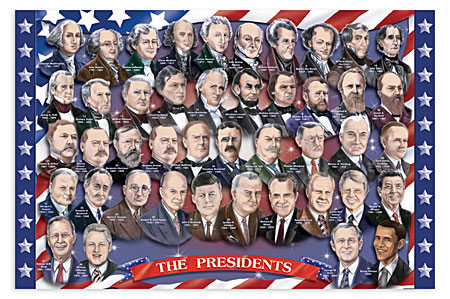 Being the president of the United States is a massive responsibility to take, especially since the president must play many roles for the people. The president must play the seven roles: Chief of State, Chief Executive, Chief Diplomat, Commander in Chief, Chief Legislator, Chief of Party, and Chief Guardian of the Economy. Many people have their own favorite role they take interest in, however I don’t have a single favorite since all these roles amaze me. The reason being is that why would anyone choose a favorite role of the president when truly it is all of these roles put together that makes a president a president,
When the president plays the Chief of State I am inspired to become like the president since he is representing the American people; the president represents the people by: awards medals to winners of college scholarships and awards soldier with high standard medals (Medal of Honor), congratulating astronauts after their long, dangerous journey in space, greeting visitors to the White House, and addressing many patriotic speeches. I also find the role of Chief of State interesting because whatever the president does, he is representing the people of America, and when he accomplishes something great, we the people have accomplished it as well. Being Chief Executive also has an important part in being a president since the president must choose people to be officials and advisers for the Executive Branch, and decides which laws of the United States must be enforced. Getting to choose the people to help run government alongside with the president may seem simple, however it is a bit more difficult since the president, with the help of his advisers, must choose the most honest and trustworthy. The Chief Diplomat, seems like a tough task to take on since the president must know what to make his diplomats and ambassadors to day to foreign government and make a foreign policy. Having to be under pressure of another country is very intimidating, in my opinion, yet the president takes it full on without showing any fear especially with the nations that threaten to destroy us. Then there is the role of Chief Legislator, which shows a bit of restriction to the president’s power, but it is important to note that his power is limited by Congress and the document known as “Separation of Powers.” Now, being the Chief Legislator, it is the president’s job to influence his own creation of laws amongst Congress since he doesn’t have the power to put them into play. This is very amazing since many people think that the president has the most power in America, yet the truth of the matter is that we live in a democratic type government that calls for equality in power. Next is the Chief of Party, which I find hilarious when a younger audience believe that it is the president’s duty to throw down parties for the people of America, but in reality his job is to help members of his political party to become elected or appointed to office especially when he has to try to be reelected for the next election. Finally comes the “smartest”
role, which is the Chief Guardian of the Economy since in this role the president must solve problems with unemployment, high taxes, tax cuts, business profits, and the general economy state of the country. I feel that this role would be the pinnacle of the president’s frustration since the economy has always been the a problem with most presidents. I personally would probably quit from being too frustrated when none of my suggestions works, but yet the president pushes hard and carries on with his job. This is why the president is amazing; the president is a person chosen to represent the people to the very end of his presidential career without ever giving up on his country.
Being a president takes lots of courage and patience, and I acknowledge the fact that we are all human and make mistakes. Though it inspires me that a person every election goes up for the role of president in order to represent all the people of America. The candidates know what they are going into is not for the faint of heart and that millions of people rest on their shoulders, and yet they continue to show up and try out for the position of president. So many roles to play and so much responsibility to withhold is what makes me believe that the president is the most interesting job any person can have.
My Chance to Take Action
Out of everything we learned in government this year, I was most interested in the Pathways of Action. It had always seemed to be that if you wanted change, it wasn’t going to happen. I used to view the government almost as a separate, secret society that was huge and powerful, and impossible to ever get in touch with. Being a high school student, I especially felt insignificant and like I did not mean anything, and what I wanted did not matter. Little did I know that there are actually several ways of approaching change and that making a difference and being heard are not impossible.
The Pathways of Action include the elections pathway, lobbying pathway, court pathway, grassroots mobilization pathway, and cultural change pathway. Through these pathways, change can be more easily achieved. I live in Irving, Texas where they have cracked down on undocumented immigration. Illegal immigration has increased and Irving passed a law that allows police to conduct an immigration check on

Irving Police
everyone they arrest. Thousands of Irving residents have been referred to the federal authorities, but many of these immigrants are facing deportation just because of minor offenses. This has divided the Irving community between Latinos and retail businesses, against strict immigration enforcement, with the mayor in the middle. I personally believe we should not be so harsh on these immigrants, but instead try to help them become citizens and turn Irving into a safe and welcoming city for them to live. After considering the ten steps in choosing a pathway of action, I have realized several things. The first is that I need to become more informed on the issue of undocumented immigration in Irving and its history. Next, I have thought through who will support me. Immigrants of Irving, businesses that employ or sell to them, and other minorities of low income will most likely support me the most. For my resources, I would have a good amount of like-minded activists, passion, and most likely the ability to get sympathetic media attention. To paint a picture of the harmless and hard working lives of many of these immigrants would be the most beneficial to our cause. The opposition is also important to take into consideration. I would be up against the police force and people with a lot more money and resources. The opposition would definitely be the biggest challenge that would require me to find older people with more power to join my cause. I could go about changing this unnecessary and strict law several ways such as the lobbying pathway or the cultural change pathway, but after considering the ten steps, to be most successful I would pursue the grassroots mobilization pathway. Through this pathway, I can attract the attention of local officials by encouraging others in my community to join me in taking strategic actions. I could organize protests or public demonstrations, and seek to educate the public on what is happening, and what should be changed. The more people I could get to support me, the more we could pressure the local officials of Irving. If I decide that I truly want to take it upon myself to make this change, then this is how I would go about it. I now see that achieving the change I want to see is not as impossible as I once thought.
It is our duty as citizens to stay active and informed. It is important that we stay involved, and when we see something that we disagree with, to seek change and become proactive. The pathways of action are ways of becoming active, and fulfilling our responsibility as citizens of the United States. We are lucky enough to live in a country where we have a voice, and can stand up for what we believe in and make a difference.
Strict or Loose Scrutiny?
Recently in government class, we discussed the judiciary aspect of the Untied States. More specifically, we performed a mock trial representing that of Fisher v. University of Texas. To start with a broad approach, an understanding of the Judiciary system in its whole is necessary to understand the trial. The United States abides by an adversarial court system in which a judge plays a relatively passive role as attorneys battle to protect each other’s sides (Choices 250). This system is directly translated into the court systems and is the format of the Fisher trial. When dealing with cases, they can either be under a civil or criminal category. The civil courts deal with seeking compensation while the criminal courts seek punishment (Choices 250). The Fisher case presents an interesting part of the judiciary system as it is debated that some judges often use precedent and maintaining the authority of the judicial system as the foundation of their decision vs. the judicial philosophies of the founders (Parish Gov). The Fisher case is not only a fun activity due to the fact that we are in the shoes of the Supreme Justices and have the ability to deliberate but it also shows how such a little “bump in the road” can reflect something so huge in the federal sense; a trial concerning the Fourteenth Amendment.

Judge
The trial consists of a petitioner, Ms. Fisher, making a claim against the University of Texas. She is challenging the university’s use of race in its undergraduate admissions process (Scouts Blog) and bringing Affirmative action into question. Affirmative action is defined by the American Civil Liberties Union (ACLU) as one of the most effective tools for redressing the injustices caused by our nation’s historic discrimination against people of color. It provides for equal opportunity when dealing with employment, and in this case, admission. The university considers academic and personal achievement when dealing with their admissions. They claim that they use a “narrowly tailored” mean of pursuing greater diversity (Oyez). Ms. Fisher, on the other hand, disagrees and says that her race hindered her from being accepted to the university. She claims it was a determining factor rather than one taken into consideration. Under the Grutter v. Bollinger, the Supreme Court argued whether “student body diversity is a compelling state interest that can justify the use of race in university admissions.” It was ruled that the admission policies at public interests must be “narrowly tailored” to pass strict scrutiny (Cornell Law).

University of Texas
Naturally, there is a conservative opinion and a liberal opinion. The conservative side is questioning the Fourteenth Amendment that guarantees equal protection of the laws without regard to a person’s race. Fisher contends that UT’s ten percent law achieves diversity within the race-conscious university and that when considering those outside of the ten percent (where she is placed), race is being used as a determining factor (Cornell Law). The conservatives also bring into question what the University of Texas calls “critical mass”. As they are unable to clearly define it, critical mass is an ambiguous “quota”. They want to achieve a certain percentage of each race within their student body and classes, which is strictly unconstitutional. Statistics show that in the years leading up to Ms. Fisher’s denial of admissions that this “quota” was present as the race percentages remain stagnant. See facts (here)

Abigail Fisher
The liberals contend that UT’s Ten Percent Law is insufficient to achieve the diversity it needs. It has increased diversity overall, but the left side claims that UT is yearning to achieve diversity within each racial group. As they yearn to create a richer educational environment, the aim to use all the aspects of their applicants in order to create a more diverse institution (Cornell Law). The liberals claim that the admissions process will prepare students for a diverse society after they leave the university, when generally speaking, makes sense. The university is trying to avoid a monotonous student makeup). They use this goal as a basis to deny the claims that their policy sets quotas and/or targets minorities for admissions. The liberals also contend that since the university does not monitor the racial composition of the class during the admissions process, it renders their accused policies as impossible. (American Bar)
Now for my perspective, it comes down to Strict Scrutiny and Affirmative Action. Whether there is this “Critical Mass” is a determining factor. The university claimed that it considers race in its admissions process until the student body has a “critical mass” (Scouts Blog). There is a fine line between factoring in or taking into consideration and being a determining factor that needs to be clearly explained in this case. The university needs to define their critical mass and be reviewed to a point where the holistic review after the Top Ten Percent Law would better the diversity as a whole, not only race. This process needs to undergo Strict Scrutiny and be reviewed once more to assure that race is a factor considered rather than used to determine.
This case proves that their may be more to a small issue. A simple denial to a college brought about a trip to the Supreme Court and an Amendment in question. When it comes down to the equal rights clause and strict scrutiny though, race can be a huge and influential factor but only to a certain extent. The benefits of being diverse are a reality, but they should only be applied to constitutionally acceptable standards. Diversity shouldn’t be defined; let it achieve itself.
The Bulgarian Predicament
 On February 27th2013 parts of the Bulgarian government left office due to recent protests over austerity measures, electricity prices and alleged official corruption. Bulgaria has faced many economic hardships and has become the 10th poorest country in Europe. Even Greece is financially outperforming the dismal Bulgarian economy. Prime Minister Boyko Borisov was the main component of the government to step down. Mr. Borisov issued a statement after making the decision saying “it is the people who put us in power and we give that back to them today.” Unfortunately, the exile of the prime minister did very little to put satisfaction back into the Bulgarians. The citizens are asking for a whole new system of government. They want to implement more of a socialistic style of government rather than a democratic one. Unfortunately for the people of Bulgaria, the president does not agree with the viewpoint of the citizens. Instead, the president is sticking with the present style of government and is currently setting up an interim one. Elections for the more permanent government will be held in April. This has not been taken well by the majority of the Bulgarians.
In my opinion the Bulgarian government made a good decision by having the Prime Minister leave office. The protests were gradually starting to become more violent, and change needed to be implemented. But not all the decisions made by the government have been ideal. I believe they should abandon the multiparty system and transfer to the government that the people are demanding. With the economy of Bulgaria being the worst of the European union and the poverty rate above 20% the government needs a more drastic change. Even though the changes that have been completed are not radical enough, the Bulgarian government is responding to the dissatisfaction of the Bulgarian people. This shows that the average citizen of a nation can make a difference in their society. This relates to our government class greatly. The goal of the class is to create citizens that are active within the United States political system. This story proves that actively representing our beliefs can make a difference to our nation and change the course of it for the better.
Sources
http://www.indexmundi.com/bulgaria/population_below_poverty_line.html
http://www.reuters.com/article/2013/02/22/us-bulgaria-government-idUSBRE91L0LI20130222
http://online.wsj.com/article/SB10001424127887323549204578315393360867474.html

Filtering Reality
The topic that has intrigued me the most this year in government class is filter bubbles. My dad has taught me ever since I was a child that I should always inform myself on both sides of an issue, consider each party fairly, and made an educated decision based on the facts. I had never heard the term “filter bubbles”, but after studying them in government, these are exactly what my dad warned me about. Simply put, “Google’s search term personalisation is detrimental to the idea of the internet as a community and is, therefore, skewing debates and discussions” (Blackburne). It is impossible to have a clear view on any topic without eliminating the bias and censorship that is inherent in any controversy.

Source: Insightful Presentations
Filter bubbles are essentially ‘tailored’ news coverage and story details. They are based on a preconceived algorithm that formulaically decides what any given person is most likely to view. While this sounds like a decent idea at first, the way that filter bubbles are implemented in society today has caused detrimental damage to our understanding of current events. These filters often cause important key information to be left out when a simple Google search is used. In fact, “From the very instant they first boot up their computer in the morning, their in-boxes comprise an unbroken catalog of outrage stories ideologically tailored to their pre-existing obsessions” (Washington Post). Furthermore, social networking sites have begun to adopt these filter bubbles to accurately target advertisements to a select group of users. Depending on what pages you click on, whose profiles you visit, and what you search for on Facebook; the ads that appear on side of the page are often times eerily familiar. That new album you just looked up? It may instantly appear on a pop-up ad just moments later. It’s almost frightening how interwoven the web has become.
Taking all of this into account, it is important to point out that while it is necessary to eliminate filter bubbles in certain settings to obtain accurate information; filter bubbles can be manipulated to be exercised for useful purposes. For example, different filter bubbles could be created (like a RSS feed) for different sides and opinions on any given story. Following this idea, it would be easy to sort and sift through basic facts from each side. This could essentially create clear-cut, categorized outlines of each party’s main topical points.

Source: Don’t Bubble Us
I am thankful that this year in government I got to experience learning about our nation without bias induced by filter bubbles or in any other way. After taking this course, I am confident that the best way to approach any issue in life is to look at both sides of an issue equally and impartially. Carefully considering things that I may initially oppose often times gives me new perspective and understanding on the subject being discussed. Unfortunately, filter bubbles are easily able to hinder this critical thinking that schools so intentionally foster. If visiting a prominent news website if filtering out things it thinks ‘won’t pertain to us’; how can we effectively evaluate any related situation? Our country needs consistency, and that includes accurate portrayal and coverage in the news.
Overall, filter bubbles aren’t being used productively by society today because citizens are only getting their initial views reinforced and aren’t being exposed to alternative options. Instead of increasing awareness on fact and different theories, our world is being shut off from a tolerant understanding of beliefs different from our own. Constantly reinforcing only our own opinions does not promote growth or change in any environment. For this reason, filter bubbles need to carefully utilized in a way that encourages American citizens to take a more active role in their government.
The Damage Of Money On Elections
 In government elections today money has become a major part of running for office. Many political parties raise money in effort to try to get their representatives to be more publicized, so that they have a better chance of getting elected. It has become more than that though, money is starting to become more of the candidates and parties focus than the election itself. They believe that they ultimately need money to win elections, which is sadly true. The only political parties that have been elected into the presidency are Republicans and Democrats. There are more political parties in the United States besides the two, but no one ever hears about them because they attain a less amount of money than the other parties. Money is an issue in government elections today and Congress should put a limit on it because it is unconstitutional. The money that is implicated with the election process is unjust: different parties have more cash than others, individuals and groups are taking advantage, and it is making government more corrupt.
Money is thought of to be unfair in political elections because a wealthier candidate would have an enhanced chance of winning. The Democratic Party and Republican Party raised a combine 2.38 billion dollars for the 2012 election alone and most of the money was spent on advertisement (Washington Post). Money is not just becoming a tool used as an advantage in government; it is also distracting candidates from their main focuses. “‘When candidates … are spending 90 percent of their time raising money,’ Bayh says, ‘that’s time they’re not spending with constituents or with public-policy experts’” (News Week). The candidates that raise the most money get more recognition and that was thought of to be unequal. Members of congress did attempt to get rid of the huge factor of money in elections. In 1971, the Federal Campaign Act was passed to try to limit the amount of money spent and after the Watergate scandal and more amendments were made. These laws passed, established a court case Buckley v. Valeo. Buckley argued that spending money was connected to freedom of speech and therefore taking away his rights of the first amendment. “The court sided with Buckley by taking away limits on overall spending, on spending on the candidates, and on spending by independent groups. However, the justices upheld the public funding of presidential elections the court allowed limits on how much an individual or group might give to a candidate” (Scott). This made loopholes in the law and political action, committees then started to give money to candidates.
This gave rise to PACs, Political Action Committees, and it allowed them to give unlimited sums of money. These corporations, groups, and individuals giving ridiculous sums of money to the candidates are how the corruption takes place. “They give their money in attempt to get access with the winners of the election, and make them wealthier” (News Week). Their money goes to reforms that they help idealize and that benefit them and their companies. This is how money is becoming a problem, since PACs are giving large sums of money, the candidates have to listen to their opinions and take them into account. This is unreasonable to the poor people in the United States because they do not have the crash to donate so that they can have an opinion in government too. PACs is why money is becoming corrupted in the election process, and government should alter the way that they are allowed to donate an unlimited amount of money.
Money has become a huge factor in elections and it is fixing which representative wins. A lot of corruption is also involved and there should be a limit on the sums of money used in elections. It creates an unfair balance between representatives because one is a lot more publicized than the others. Money has also become a distraction in the government; they should be more focused on their priorities, which are the citizens of the United States.
It is Women’s Right to Decide
In government class we had discussed the many different ways to become active in government. The pathways of action, and especially the court pathway, are one of the many ways that citizens can participate in government. The court pathway has been used to shape government. In the courtroom they use the Constitution to back up their argument. In this instance using the Constitution is the most powerful tool because it is one of the founding principles of our nation.
The use of the Constitution was extremely evident in the Roe vs. Wade Case in 1973. The Roe vs. Wade case was very instrumental in changing the law nationwide. They had used the court pathway to shape the nation by “establishing a right of personal privacy protected by the due process clause that included the right of a woman to determine whether or not to bear a child” (Justia Law)

Curtsey of Cecilia.W.Yu
. They had won the case 7-2 because under the Constitution in Amendment Fourteen, women obtain the right to equal protection, and liberty. The lawyers in the Roe vs. Wade case had skillfully used the Constitution as a tool to reinforce that all people have the right to privacy, and that women have the right to decide if they want to have an abortion.
However, the Constitution did not anticipate abortion so there are places in the Constitution where it is not clear. Pro-life activists used this to their advantage. The pro-life activists had used every pathway to pass new laws and place restrictions upon abortion. In the Constitution it states that “All persons born or naturalized in the United States…” (Choices, The Constitution). The Constitution does not clarify and say that all persons born and unborn should not be deprived of life. But the Constitution does not indicate whether the person can be unborn. There are some “gray” areas in the Constitution but it is ultimately up to the judges of the case to determine what is being said and how to apply that knowledge to modern day living.
The pro-choice advocates led with the issue that women could have health risks if abortion was banned due to the violent uprisings of the pro-life advocates. Some pro-life activists burned down abortion clinics, and attacked the doctors performing these operations. These serious actions proved that it is a controversial issue. Some women do need these clinics, and if the women did not have the option they would turn to people that were not specifically trained to do so, and could potentially suffer severe problems or face death.

Curtsey of “The World As I see it” Blog by albertacowpoke
Under the Constitution, I believe that every woman should have the option to have an abortion. Despite the many protestors against pro-choice, it is ultimately up to the woman. The fourteenth amendment clearly states that women have the right to choose whether she wants to terminate her pregnancy. She has the right to her privacy if she doesn’t want to share her personal information to the public. The government cannot dictate that only have an abortion if the woman has health issues, or her decision on if she wants to proceed with the operation.
Abby
Burst Your Bubble
Source: Don’t Bubble
On the second day of government class, we did an assignment on bias and filter bubbles (Parish Government). I had never thought about this topic and how it could potentially be related to government. It was shocking to me to discover how what we search on our computers and phones enables our later searches to be narrowed down to seemingly only what we want to see. Who would have thought that when the person sitting next to me in class googled the exact same thing that I did at the exact same time, different search results popped up for both of us. Some articles were higher up on the list on my search and some articles that popped up on her search weren’t even present on mind. Internet sites such as Yahoo, Google, and Facebook all control what we are seeing based on the information they have “gathered” on us as individuals.

Source: Audio Editions
Sites such as Yahoo, Google, and Facebook edit what we see on the Internet based on previous searches. Google looks at everything you are doing, including where you are searching from, and uses that information to filter your searches to what it believes you will want to see. Yahoo is a personalized site where people will receive different information when searching for the same thing (TED). Facebook uses recent searches on your computer to customize the type of advertisements that pop up on the sides of your page. If you had recently searched for an SAT tutor then logged onto your Facebook account, it is likely that you will see and add for SAT online tutoring or SAT prep books. The Internet is showing us what it thinks we want to see based on past searches instead of what we need to see. We don’t have a choice of what gets edited in and we don’t see what gets edited out. Factors such as political beliefs play a major role in what the Internet filters for a specific person (TED). If someone is constantly searching for a certain political party, the Internet will eventually detect those searches and start to filter our searches so that we are only seeing the results that mirror our political beliefs. We are cut off from other’s innovative thoughts about certain factors and find ourselves stuck in a box of our own beliefs not willing to accept other points of view. We become trapped and see no way other than our own while there are so many different ideas floating around that could be better or that could add on to and improve our own thoughts. Being deprived of all ideas does not improve an individual and his/her knowledge but rather hinders him/her.
We need to have some control on what gets through and what doesn’t because, sometimes, the limited information given to us only isolates us from the rest of the world and important issues that we should be cognizant of. This disconnection from the rest of the world can easily harm our society instead of help it. Being unaware of certain issues and view points just because an individual searched for an opposing view is trapping him/her in a bubble that he/she cannot burst. I believe that we must work to burst this filter bubble in which we are confined in order to broaden our perspectives on issues that involve opinions and ideas other than our own.
Too far over the edge

Source: Icic.com
During the second trimester of Government one topic that really interested me was the fiscal cliff project. I guess I was lucky we went into depth over this topic. The reason this topic was so interesting was because it was something that going to affect us in real time, it wasn’t a law or something that only affected us if we didn’t follow the rules or broke the law. Also the fact that the whole nation had to worry about the looming fiscal cliff was really eye opening for many people. For about the one percent of the people that don’t know what the fiscal cliff is, it is a set of budget control acts that were placed to activate once we reached a certain amount of debt. The cuts varied all the way from the defense program to medicaid. The cuts were supposed to go into affect in January providing both political parties didn’t get something worked out. The looming cliff also would raise taxes for everyone! But as everyone expected Obama was able to work out a deal before the dead line ever came. The deal that both parties were able to come to peace with was a deal that technically just moved back the budget cuts until March. March being right around the corner we can all assume what is going to be on CNN and on the daily news, The Fiscal Cliff. I feel like Obama has a tough situation on his hand because he has the job of making up a plan that both parties will like and agree on, which would literally be the hardest thing. Knowing both parties fight for different things and finding something in the middle of budget cuts and raising taxes doesn’t sound too likely with this crisis coming up within the next month. The thing that this project made me really think about was the compromise both parties have to make. I had known that both parties had separate views but had never really thought about how much they must argue and how hard it would to come to a deal. As an American I think it’s vital that both groups come to agreements on everything they do or else the government would just be in shambles.

Source: drkarenruskin.com
We as Americans have the right to form our own opinions about anything, therefor our own opinions on political views, each side stands for something different and if you’re in the middle you aren’t really contributing to the people in congress and helping the nation progress as a whole. Something that this class has made me realize is that too many people follow in their parents foot steps because thats all they know, it is critical that everyone forms their own opinion on each situation. That opinion may be the opinion of your parents but is so important that you stand up what you believe for and not only stand up but also represent your political party. Not knowing what party you favor is fine, but its vital that you educate yourself during this time on not knowing so that when you become old enough to vote its a simple decision and you are helping the government and everybody in the states. Junior year in high school was a perfect time to this class into affect, to many people would blow it off any other year before that and junior year is right before you’re 18 giving a heads up on what politics are, how you affect them if you do or do not vote. Before being in this class I didn’t know much about politics and how our government works. But after two trimesters it really opens your mind about whats happening and helps you form your own opinions.
Exploring the Presidency
This year in government class I learned about the basis of our government through our six units: Civics 101, Foundations, Elections, Presidency, Congress, and Judiciary. I came into class barely knowing anything and was constantly confused when my brother and dad were talking about politics in front of me. Now, I have a greater knowledge of the government and I am able to participate in the various conversations my family has about politics. My favorite unit out of the last two trimesters was the presidency because I enjoyed learning about the specific duties and leadership positions that our president takes on.
Prior to this unit, I did not know the specific powers and duties the president has. All I knew is that he was the leader of our country. But, there is a lot more to the job than just being a leader. In class we explored the powers and limitations of the President through reading Article II of the constitution, Richard Neustadt’s Presidential Power and Clinton Rossiter’s The American Presidency. Article II helped me understand what the President can and cannot do during his presidency. Neustadt’s Presidential Powers discusses the informal powers of the President. Then, The American Presidency explores the modern roles of the President. These three pieces broadened my views on the presidency.

Photo Credit: Mediaite
My favorite activity we did during class this year while learning about the presidency was fun with Article II. This made me analyze and take a deeper look into Article II of the Constitution. Instead of just reading through the article and retaining some information I had to closely read what the text is specifically saying. In the activity, we read eight hypothetical solutions and had to find out if they are constitutional or unconstitutional. This helped me explore the constitution in a new way that is more fun than simply reading it. One thing that I found interesting was that the constitution states that the president has to “give to the Congress Information of the State of the Union”(Article II Section 3). While the president always gives the State of the Union address to the nation he does not have to. The president can just give the Congress a letter. The Constitution only states that he has to give the Congress information of the State of the Union not the whole nation.
The next step in exploring the presidency was looking at the modern roles of the president. Rossiter mentions ten presidential roles that the president has. These roles include: Chief Executive, Commander in Chief, World Leader, Chief of State, Chief of Legislator, Chief Diplomat, Protector of the Peace, Voice of the People, Manager of Prosperity, and Chief of Party. Personally I think the most important role of the president is Chief Executive. By reading Rossiter’s The American Presidency, I learned that as Chief Executive the president must choose federal officials, manage national affairs, develop policies, and enforce federal laws and court rulings. These responsibilities of the president especially affect the United States and the citizens. Then, on the other hand, I personally think that the least important role of the president is Chief of Party. While the president is the representative of his party, his commitment as president is not to his party but to his country as a whole. Before reading this piece I did not know about all the roles the president takes on when he comes into office. The president definitely keeps himself busy with all the roles he plays.

Photo Credit: Econintersect
The last step in exploring the presidency is looking at his informal powers. Neustadt’s Presidential Power explores the informal powers the president has. In my opinion, the most important informal power Neustadt mentioned was the act to persuade. The president has to persuade people every day that what he is doing is what is best for our country. Persuasion is a big part of being a president and every successful president uses persuasion to prove that everything he does is in the nations best interest.
The presidency was my favorite unit because I explored things I never knew or understood before. Now I know the many different limitations and roles the president has as leader of our country. Overall, government class has taught me a lot about our nation and how it runs, specifically each branch of the government.
Government Made Fun?
Though this activity was fun and education, it was not the section I liked the most, but rather that spot would have to go to the Mock Trial we did in the last section of the course. We were studying the Judiciary for the last subject and our teacher said, “Why would you want to sit there and listen to me teach you about the judiciary. And why would I want to have to prepare a powerpoint and lecture you for the class” (for clarification purpose, this is paraphrasing what he said). So instead of making us sit and take notes, he had us reenact a real case, one that the Supreme Court has not yet released a decision for. We were to hold a mock trial for the Fisher vs. UT case, three people volunteered to be Petitioners for Fisher and three people volunteered to be the Respondents for UT. The rest were to be the Justices in the Supreme Court, I was included in this group. We were also assigned a

Fisher v. UT Source: Policymic
Supreme Court Justice to act as, I was Samuel Alito. We read our Justices’ bio to figure how our Justice would act and then wrote questions to ask the two sides of the court case. When the Mock Trial began I took the role I was given and ran with it. I was probably the one who asked the most questions, to both sides. I asked so many different questions, I even played Devil’s Advocate. By the end of the trial I was so into it that I could not stop thinking about the case for most of the day. Even though I have no interest into going into politics or law, I do like to question people and argue cases. When I was able to question the Petitioners’ and Respondents’ arguments, I was having a great time getting the information I wanted to know out of the two sides. At the end of the case we all voted like the Supreme Court would, it was a very educational and exciting experience.
This year’ Government course has been the most interesting and thought provoking class. The unique way it is taught is new to me. Because the class is centered around the Internet, it is a very effective way to teach todays’ high schoolers. I believe if the class were to be taught in a more traditional way, I would not have learned as much nor would I have enjoyed the it as much.
Gov Class
 This year in Government I have most enjoyed the debates and our discussions on twitter and in class about our thoughts on the candidates’ views and how they presented them. As a class it was widely agreed upon that Governor Romney started off the debates hot, he came out portraying his views and plans very strongly while President Obama seemed to have a relaxed or aloof demeanor, almost suggesting that he thought he already had won the presidential race. CNN covered the first debate in Denver and they believed that “Romney was hungry, Obama was flat.” The discussion about the debate was raging on twitter as students and teacher alike spoke their thoughts. Mr. Schmidt, one of our teachers in the English department chimed in on the conversation going on at our ParishGOV twitter page by saying, “Obama is totally taking the bait: engaging Romney in the Reagan-era culture war.” He was also of the belief that Romney started hot and Obama fell into a lull. Seeing the different views of people in our class and how heated the conversations could get was rather interesting. Every clashing idea and every agreement was expressed without holding back while trying to prove their own thought or disprove another. The class discussions were definitely a very memorable part from government class.
When we were able to do our class work with a group and then break off by ourselves to finish the other half of the assignment, was very enriching. Since we were able to gain the perspective of the group’s members before we broke off to do the rest of assignment by ourselves we could answer the questions on our own with a broader and more insightful perspective on the subject. Without starting the assignment with the group we would have had a more narrow view of the subject and would not have been able to answer the questions to our full potential.
Towards the end of the second trimester when we began to have current event presentations the classroom erupted in discussion over the current issues and news in America. Gun control and North Korea were the big topics for our current events and discussions and debates on them. North Korea’s nuclear warhead threat was incessantly debated and talked about in our class. The Guardian reported that North Korea has been testing the nuclear warheads for a while and they were being tested again in early February. In class the debate went on about whether North Korea was a threat to the United States or not. The current event presentations in class gave us a great view of the world today and a chance to express our own opinions about it.
Government class this year has been a very enriching and exciting experience for me and most likely the whole class. Class discussion, working together on work, and current events made the class very interesting for anyone avidly participating and even people who just wanted to listen. Everyone gained new knowledge on how to better your thought process and how to support and speak about your own opinions.
It has long been obvious….

Source: avoca
Should women be allowed to have active combat roles? Traditionally, the armed forces have been all male. For years, even gay men couldn’t serve openly. It has only been in the past few years, after decades of hiding, that men can be openly gay and serve, so why will they allow women to serve so soon? If history has anything to show, it should take the government another 20 years before they let women into the military. If allowing openly gay men to serve was such a big step, the step to allow female presence is like climbing a mountain. Surprisingly though, the pentagon has taken the idea of women in combat out for a spin before. In 1993, the same year president Clinton agreed to the “don’t ask, don’t tell” compromise, they allowed woman to participate as combat pilots. It may seem like a big step, but sure enough, the following year they denied women’s participation. Being a pilot isn’t new either. During World War II, women served as test pilots. Way before that, during the civil war, wives worked in the artillery and as nurses on the front lines.

Source: PoliticalLoudMouth, WordPress
Over the years, in just Iraq and Afghanistan, more than 800 women have been wounded and over 150 have died proforming their military duty. So doesn’t that imply that women already serve? No, it doesn’t. Although woman “now make up 14 percent of our armed forces form across all branches of the services”, many women are denied formal recognition of their combat (NYtimes). They do not formally have active combat roles but are still put in hostile situations. How do these branches get around the rules? They “sidestep official policy by “attaching,” rather than assigning, women to infantry and special operations units because their skills were needed” (NYTimes). Army Capt. Kelly Hasselman, 28, commands a company of female soldiers that builds relations with rural Afghan women. Officially, they aren’t in active combat, but everybody knows the truth; “we’re already here”, she states, “it’s just not officially in the books”.
Furthermore, women are beneficial to the military. It’s not like they don’t want women in the military because they are inferior. It’s because of preconcieved gender roles. A key phrase mentioned earlier was that women’s “skills are needed”. Reports dating back to 1951 find that women make just as many important contributions to the military as men do. Two women were even awarded the Silver Star, the nation’s third-highest medal for gallantry in combat. (LATimes). It is so shocking that the government can grant two women this medal and not realize the twisted irony. They are awarding two women for something that according to them then shouldn’t have been doing. Granted, since World War II, the United States has been trying to integrate women into the forces but it still isn’t fully condoned. So obviously not many people are truly against women actually serving against the military, many are just against the idea of it.

Source: Gazette
Opposing viewpoints argue that most women aren’t capable of the physical demands men must endure when in combat, especially in the infantry. They are concerned about upholding military fitness as well as scenarios where a man is injured and the women must carry him out. The honest truth is that most can’t. But the ones that want to join the armed forces are the ones that can. They are the ones that will work hard to meet the same standards. Rosie Darby, a 20 year-old medic was assigned to a combat outpost as a healthcare specialist. Her job requires her to trek through vineyards and fields to avoid mines, all the while carrying medical supplies. The other men in her platoon say that she outperforms half them. She isn’t concerned about physical demands. Her concern is emotional attachment. She says the men in her platoon think of her as a little sister and would want to take care of her if she were injured, even if they should be continuing the fight. This would pose a threat to the success of the mission. But these are minor problems compared to the overall goal. Women who cannot handle the stamina required are weeded out or reassigned just like men are. As for emotional attachment, it is up to women to prove that they are no different, by any means, than the men. It is something that men will have to get used to.
Last month, the Defense Secretary announced that they would be lifting the ban on women in combat. Although the ban will not be fully phased out until 2016, it is a time to celebrate. Women have time and time again proven their effectiveness and worthiness to join men in combat and finally have their chance to prove to the world that this should have happened a long time ago.
Title from political cartoon
The So-Called “Weak” Supreme Court

Many times, the Supreme Court seems to attract less attention in our minds and in the media than the highest part of other branches, like the Presidency or Congress. In fact, in our first day of learning about the court, we read Federalist #78 by Alexander Hamilton, which asserts that the Judicial Branch is the weakest of the three branches. However, this is not by fault: it is both intentional and beneficial.
The Judicial branch and the Supreme Court seem to operate differently than the Legislative or Executive branches. The justices are appointed by the President, not elected by the United States populace. Their tenure is for life, not any set term. Most importantly, they are meant to interpret the Constitution and current laws, as opposed to viewing them as concrete. Their ability to interpret and influence upon laws gives them, as argued in Federalist #78, the greatest power over the Constitution within the government. The actual words of the Constitution do not matter as much as how the justices decide to interpret and apply those words. The Court has a much lower turnover rate in terms of its personnel and thus is less susceptible to change in opinions and ideas than the Executive or Legislative branches. To me, the Supreme Court is one of the most intriguing facets of government. Throughout its history, its decisions have integrated schools, legalized abortion, further defined affirmative action, and upheld the Affordable Care Act. In 2013, the Court will likely hear cases that will have great effect on affirmative action, voting rights, and gay marriage.

How then, can it be said that the Supreme Court is the “weakest” branch, when it has clearly carried power and controversy in recent history? Truthfully, the Judicial Branch is only the weakest branch in terms of its ability to change the Constitution. While the Constitution may be absolutely central to what the Supreme Court does, the Judicial branch can do nothing to change or add to the words written in the Constitution. While the other branches can directly influence the Constitution, the Judicial only has the power to interpret it. This fact is, of course, completely by design. Montesquieu, a French philosopher who influenced the founding fathers, once said “there is no liberty, if the power of judging be not separated from the legislative and executive powers.” This sentiment is later echoed in Andrew Hamilton’s Federalist #78, and its effect is clear to this day in the structure of our government.
A so-called “weak” Judicial branch, separating the modifiers of the Constitution from its enforcers, is one of the many smaller designs by the founding fathers that has had a large impact. The Supreme Court has managed to remain an effective means of enforcement for nearly 250 years, and with its recent past of justified decisions, it looks to continue to do so.
Young or Old we can all make a Difference
Election, lobbying, court, grassroots mobilization, and cultural change pathways are what make America a democracy. All five pathways allow citizens, of any age, to participate in America’s political system. While learning each pathway, the cultural change pathway seemed to stay with me. Cultural change pathway is when a person tries to change citizen’s mind about a certain topic. This approach is an indirect way in influencing the government.
 When we were learning about the five pathways, I wanted to find an example that exemplified the cultural change pathway. On October 9, 2012, I didn’t expect to find my example, but I did. I also found a hero that day. A fifteen-year-old activist named Malala Yousufzai changed my life. Malala was an activist who lived in Swat Valley, Pakistan. She fought the Taliban for the right for girls to earn an education. Malala had a blog where she described the hardships of not going to school. She wanted to be something in life and she needed an education do it. Through out the world, people started to read her blog. Her blog caught the attention of so many girls. Most importantly, she caught the attention of the people in her hometown. Once people started listening to what Malala had to say about girls and education, many families in Swat Valley decided that it was worth it to fight the Taliban in order to give their girls a better life. Ton of girls started to protest for the right to go to school and that’s when the Taliban decided they had enough. The Taliban went to Malala’s school and shot her in front of her friends.This young girl changed the view of education for girls throughout the world. Her goal was to just change the minds of the citizens in her hometown, yet she it went much farther than that. This story is an amazing example of the cultural change pathway. Before Malala started to voice out her opinions, the people of Swat Valley were just content to let the Taliban control everything. Now the people are ready to fight for education. Cultural change is when a person changes people’s opinions to try to indirectly influence the government. Malala succeeded in the political pathway.
These pathways give citizens a voice in politics. The citizens of the United States should be lucky that these pathways are given to them. In other countries, people don’t have a voice. Learning about these pathways made me want to make a difference in the political world. I never thought, as a young person, that we could make a difference. I mean, what can a teenager do in the political system? Malala really changed my opinion about these pathways. If a fifteen year old can change the lives of many, who’s to say young people can’t change lives?
All of the pathways are important, but I believe that the cultural change pathway is the best pathway. Instead of going straight to the government, this pathway allows individuals to convince other people to listen to their side. This pathway is a great way to get the governments attention. If a person were able to change the opinions of a lot of people, then maybe the government would take notice. So, I learned that we have to take advantage of these pathways. Even though we are young, these pathways allow are voices to be heard.
Hands on learning about the Supreme Court case of Abigail Fisher

Supreme Court Justices (2013)
So far this year, I think the most interesting thing that our class has done was the mock trial of the Abigail Fisher Supreme Court case.(NY Times) It was not only good to learn about more current events, but also really enjoyable to act it out instead of just sitting at the desk, reading about it. It was interesting to learn about the actual proceedings of the Supreme Court and I think we very much appreciated the hands on experience as opposed to just learning in a more passive manner.
The Supreme Court case of Abigail Fisher versus the University of Texas is a hotly debated current event surrounding a high school students rejection from the University of Texas. Fisher’s argument is that she, a white female, was not accepted to the school while other minority students with lower academic achievements were accepted. She felt that she was denied entrance based solely on her race. However, the University of Texas argues in response that they encourage diversity and were not violating Fisher’s 14th amendment right but rejecting her but rather, they were accepting students that would make the school a more diverse place in order to prepare students more for the real world.
It is important for us to learn about and keep track of current events like this because it prepares us to one day be citizens of the real world who have to make informed opinions on a daily basis. Our generation will one day be the lawyers, legislators and Supreme Court justices that make decisions that could deeply affect people’s lives. To do so while uninformed about the issues at hand would be a disservice to the people who are governed by these decisions. It is imperative for me and people my age to learn how to stay informed because it prepares us greatly for the future.
There seems to be more intake of information for students, in my opinion, when we do things like act out supreme court cases as opposed to just reading about them. Reading is passive, boring and pretty much what we do all day. It’s nice to take a break, be engaged and active in our own learning process. People tend to be more interested in something like doing a mock trial of a current case than reading about the decision of one that has already happened.
The Supreme Court is one of America’s most interesting parts of the government because it makes decisions based on actual cases. It is crucial for us as possible future Supreme Court justices to learn how it works in a way that both interests us and helps us to understand the massive role it plays in the governing of American people.


